
Introduction
Understanding how price moves throughout the week can give traders a powerful edge. One concept that often gets overlooked but can significantly improve your daily bias is the intraweek reversal. This profile helps you interpret when the market is shifting direction midweek, even when the structure is not perfectly clean.
In this guide, we will break down what an intraweek reversal is, how it forms, and how you can use it to align your trades with higher probability setups.
What Is an Intraweek Reversal
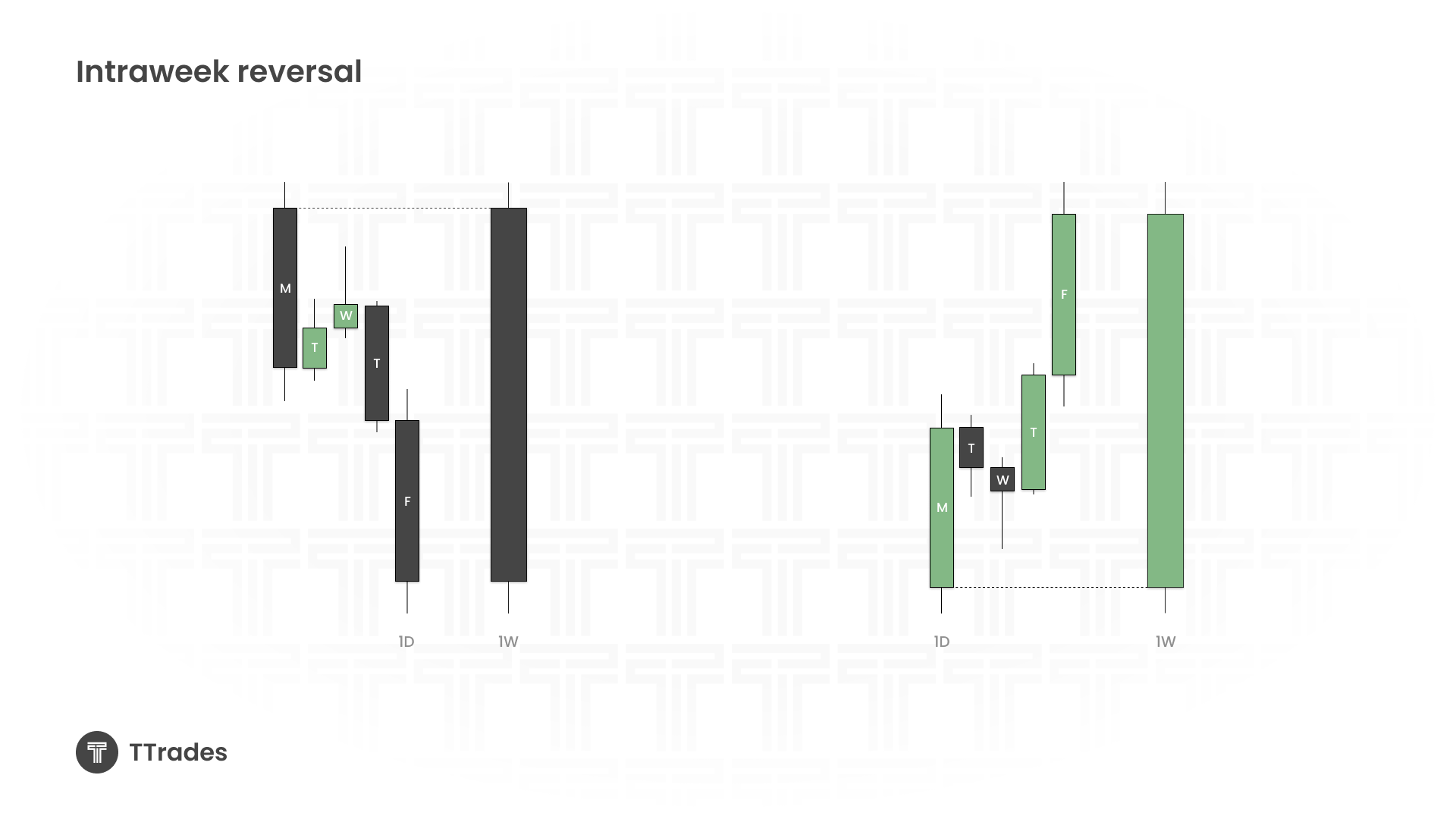
An intraweek reversal happens when the market does not form the high or low of the week at the expected time typically early in the week but instead shifts direction later usually around Wednesday or Thursday.
Instead of a clean textbook weekly pattern, the market behaves more fluidly
- Early expansion on Monday
- Midweek consolidation on Tuesday
- Reversal formation on Wednesday or Thursday
- Continuation into Thursday and Friday or Friday and Monday
The key is recognizing that the reversal forms within the week, not at the beginning.
The Core Logic Behind It
At its core, this profile is about identifying where the market likely formed its true high or low of the week, then trading away from that point.
Here is the simplified flow
- Price expands away from the weekly open
- Market consolidates
- A reversal appears midweek
- Price continues in the new direction
This is not about memorizing patterns it is about understanding market direction.
What You Should Look For
To confidently trade an intraweek reversal, you need a few key confirmations working together.
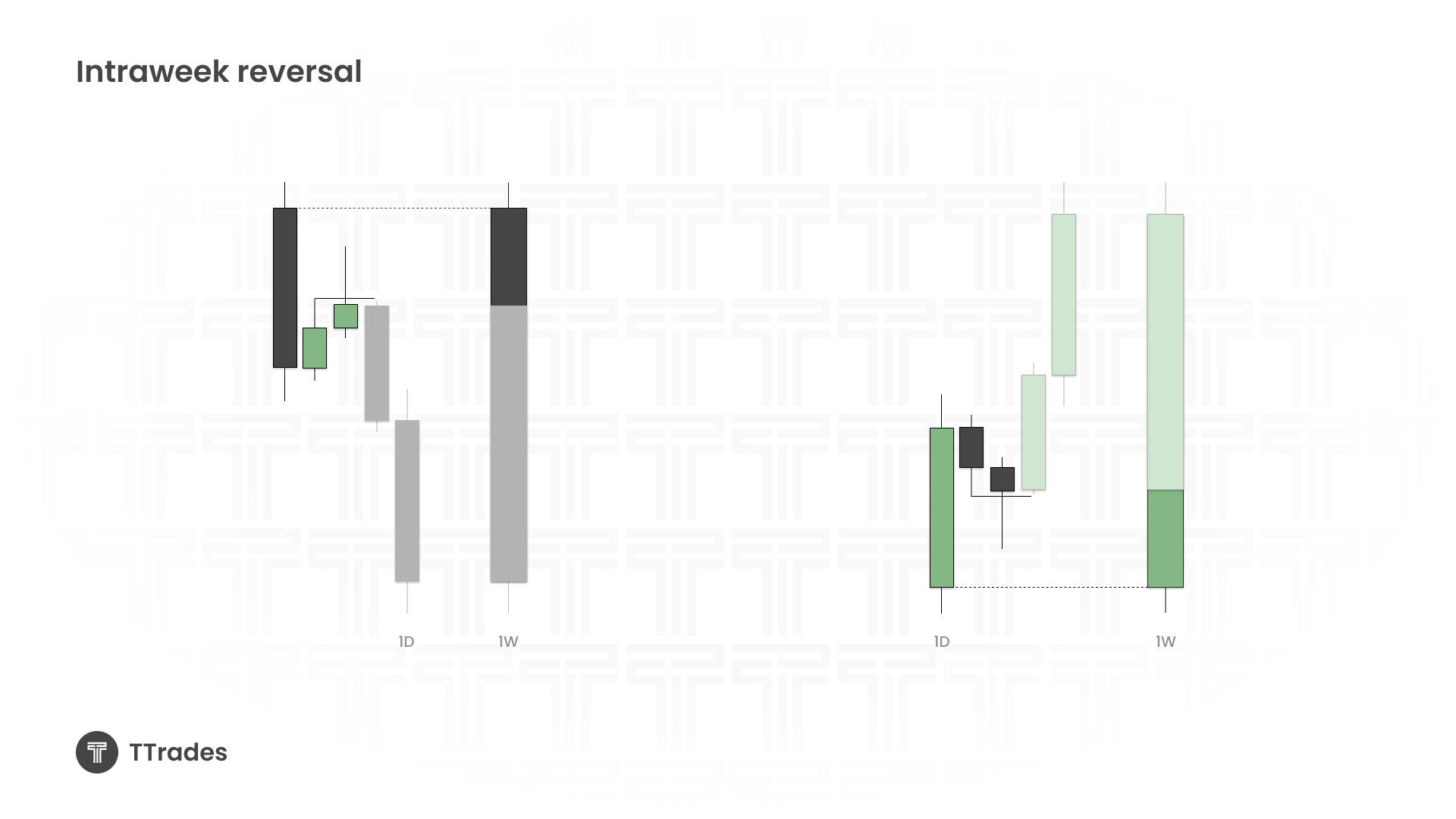
First, identify a reversal candle midweek
- Candle 2 or Candle 3 closure
- Ideally at a point of interest such as a high or low or fair value gap
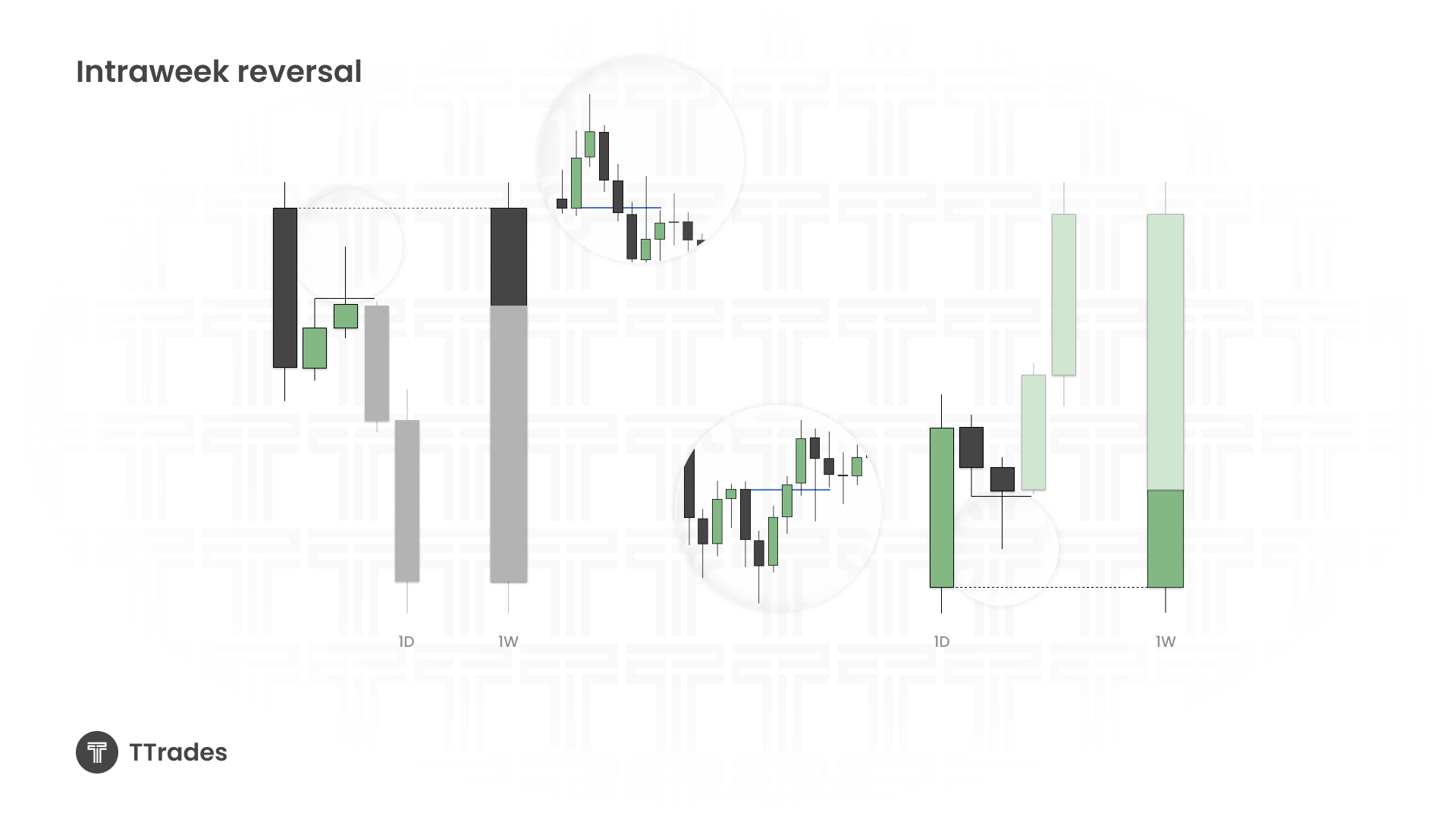
Then drop to a lower timeframe like the hourly and confirm
- A change in the state of delivery providing confirmation.
Only after that should you look for continuation trades.
Example Scenario Breakdown
Here is a common bullish setup
- Monday shows strong expansion upward signaling bullish intent
- Tuesday forms a small consolidation with no reversal yet
- Wednesday sweeps lows and closes bullish creating a potential reversal
- Hourly timeframe confirms a shift in price
- Thursday continues higher
- Friday continues the move or forms a range
Even if Wednesday is not perfect, Thursday can still act as the reversal candle. Flexibility matters.
When the Setup Gets Messy
Not every intraweek reversal is clean and that is normal.
You might see
- Mixed market structure with both bullish and bearish candles
- Weak reactions at key levels
- Choppy intraday movement
In these cases
- Wait for stronger confirmation
- Let price form a clearer swing point
- Avoid forcing trades just to match a pattern
The goal is to follow logic, not patterns.
Using Daily and Hourly Together
The real strength of this model comes from combining timeframes.
- Daily timeframe identifies structure and bias
- Hourly timeframe confirms execution entries
This alignment helps filter out weak setups and improves timing.
Key Takeaways
Intraweek reversals are about reading the story of price, not forcing symmetry.
Keep these principles in mind
- The high or low of the week does not always form early
- Midweek reversals are valid and often powerful
- Confirmation on lower timeframes is essential
Once you understand this, your ability to build a consistent daily bias improves significantly.