

Introduction
If you’ve ever struggled with when to trade during the week not just what direction then the concept of a classic expansion weekly profile can completely change how you approach the market. Instead of chasing every move this profile helps you identify when price is most likely to expand and when it is better to stay out.
In this guide we break the idea down into a simple structure so you can apply it directly to your charts.
What Is a Classic Expansion Week
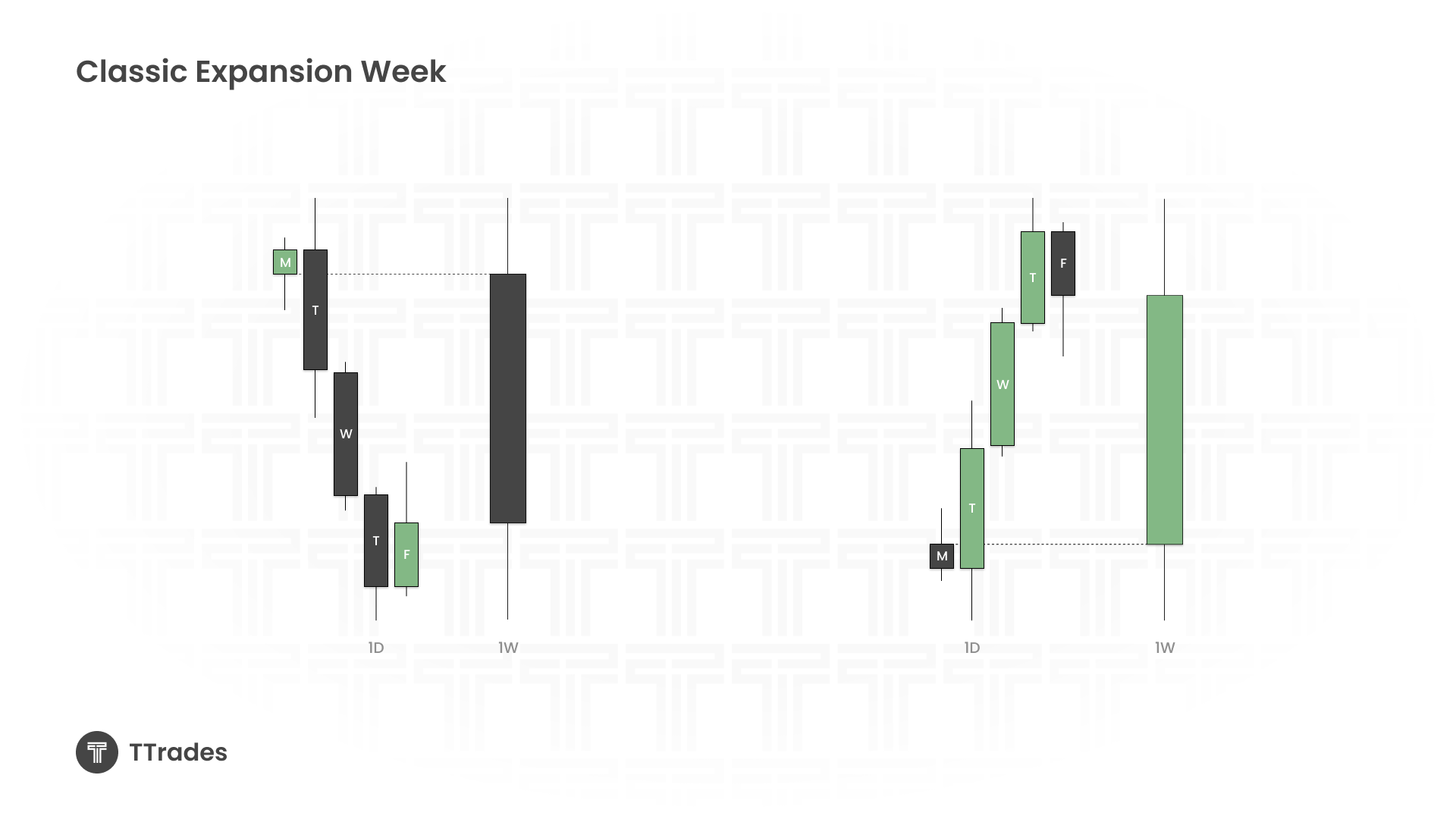
A Classic Expansion Week is a market pattern where price establishes a clear direction early in the week and then expands in that direction over multiple days.
At its core it focuses on two things
- Identifying a weekly bias
- Capitalizing on multi day expansion
Think of it as the market setting direction early and then following through with momentum.
The Core Structure
A Classic Expansion Week follows a consistent rhythm
- Monday or Tuesday forms the high or low of the week
- Midweek brings strong directional expansion
- Friday slows down or caps the range
There are two variations
Bullish scenario
- Low of the week forms Monday or Tuesday
- Price expands higher for two to three days
Bearish scenario
- High of the week forms Monday or Tuesday
- Price expands lower for two to three days
Step 1 Establish Your Bias
Before anything else you need a directional idea
This usually comes from
- Higher timeframe reversals
- Retracements into key levels
- Market structure confirms continuation
The goal is not to predict the exact day but to prepare for directional expansion.
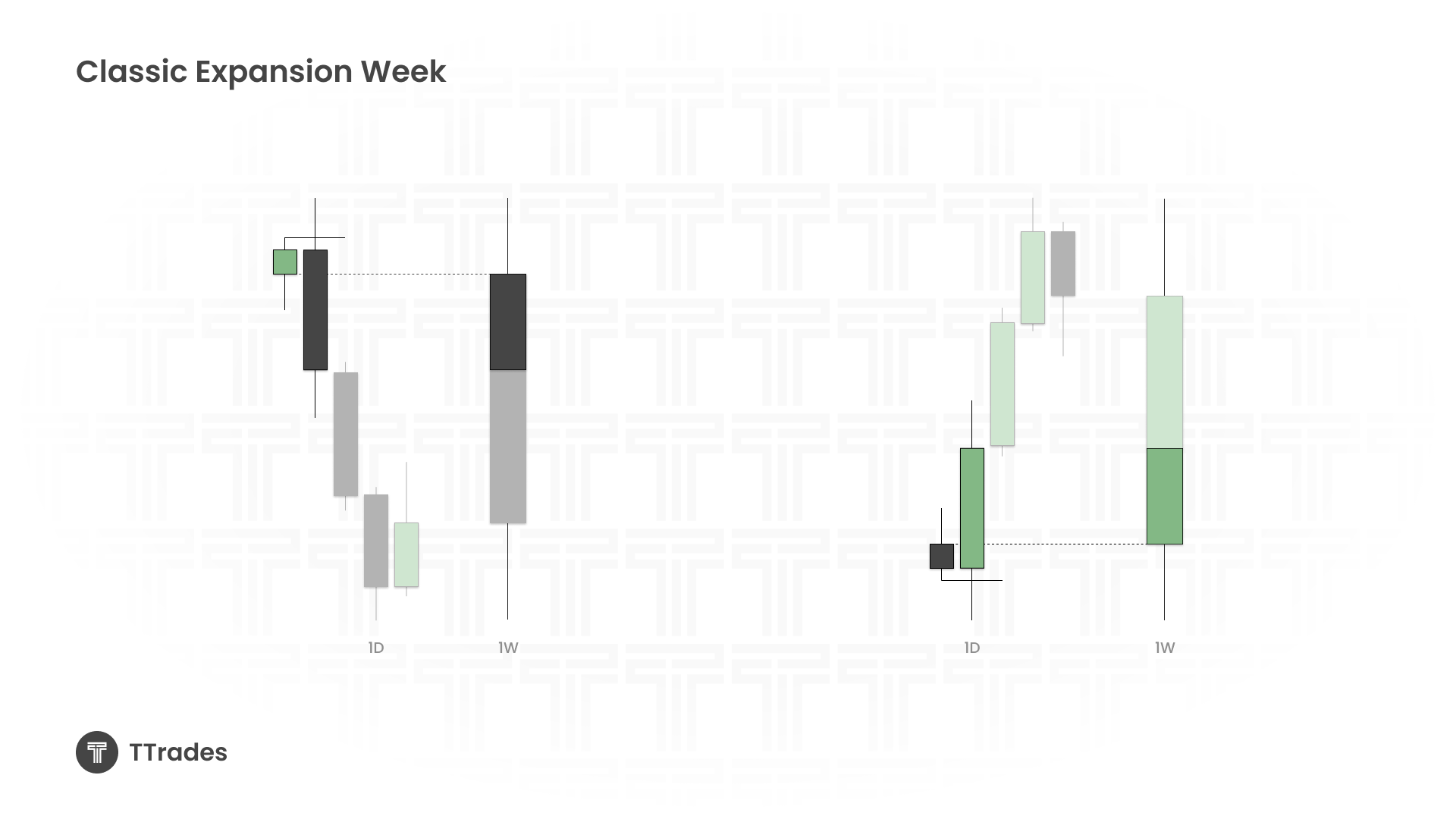
Step 2 Identify the Candle two Closure
A candle two closure helps confirm that the high or low of the week is likely set
What to look for
- Strong directional close
- Break through prior opposing candles
- Occurring at a key level
This gives the first indication that the market may begin expanding.
Step 3 Confirm with Lower Timeframe Delivery
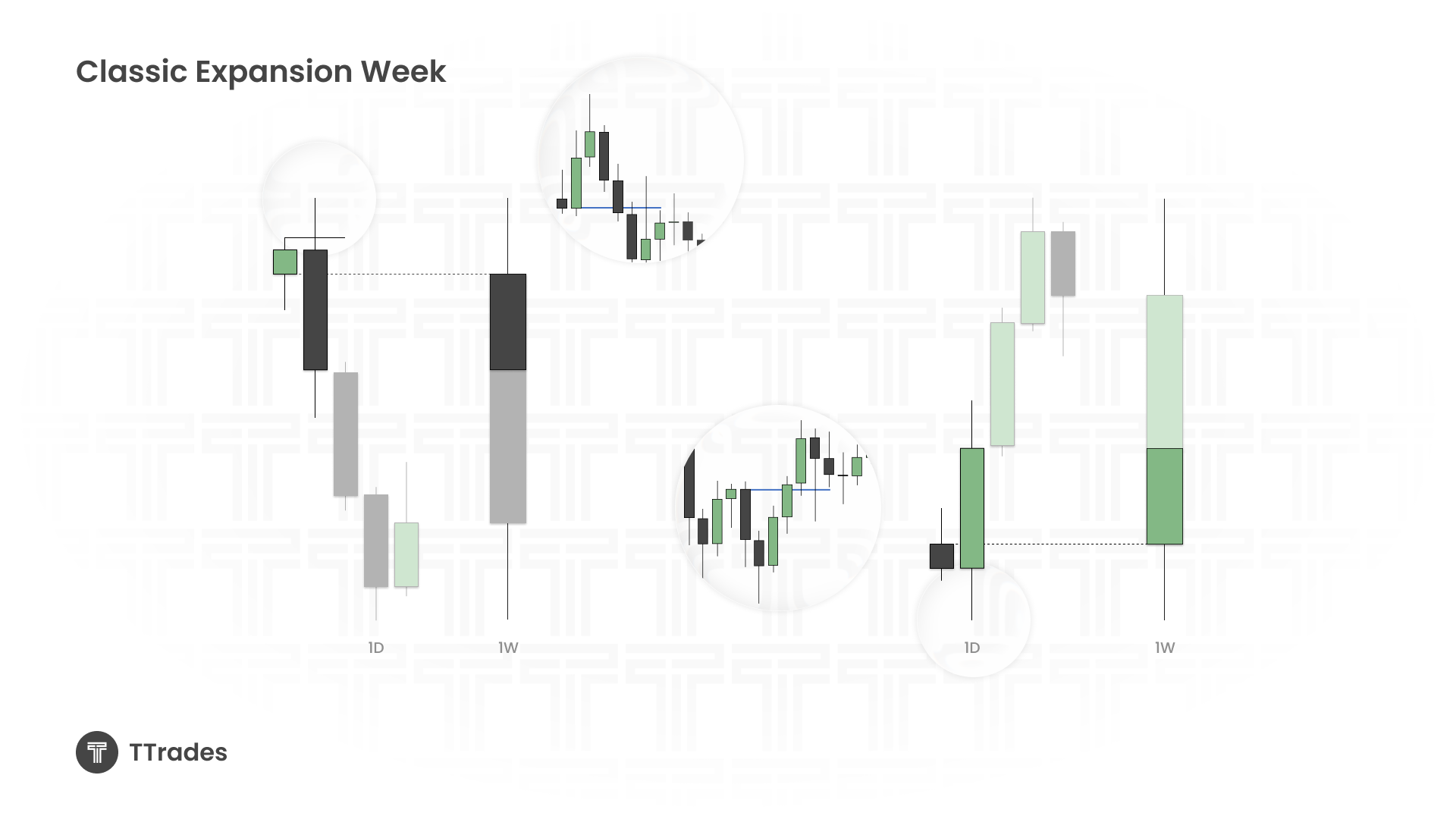
After identifying a candle two closure move to a lower timeframe such as the one hour chart
You want to see a change in the state of delivery meaning
- A shift in price behavior
- Structure breaking and closing in the new direction
This confirmation supports continuation trades.
Step 4 Trade the Expansion Days
This is where the highest probability opportunities appear
After confirmation
- Wednesday offers the first expansion opportunity
- Thursday offers the second expansion opportunity
Sometimes Tuesday can also be tradable depending on when confirmation forms
The focus is on continuation not reversal.
Step 5 Know When to Stop
After two or three strong expansion days the move is often extended
At this stage
- Higher timeframe targets may be reached
- Price can become choppy
- Probability of continuation decreases
Friday is often slower and can form a new phase of price rather than a continuation day.
How It Looks in Practice
A simplified sequence looks like this
- Monday sets up the move
- Tuesday confirms the high or low of the week
- Wednesday expands
- Thursday continues expansion
- Friday slows or consolidates
Not every week will follow this perfectly.
Imperfect Setups Still Work
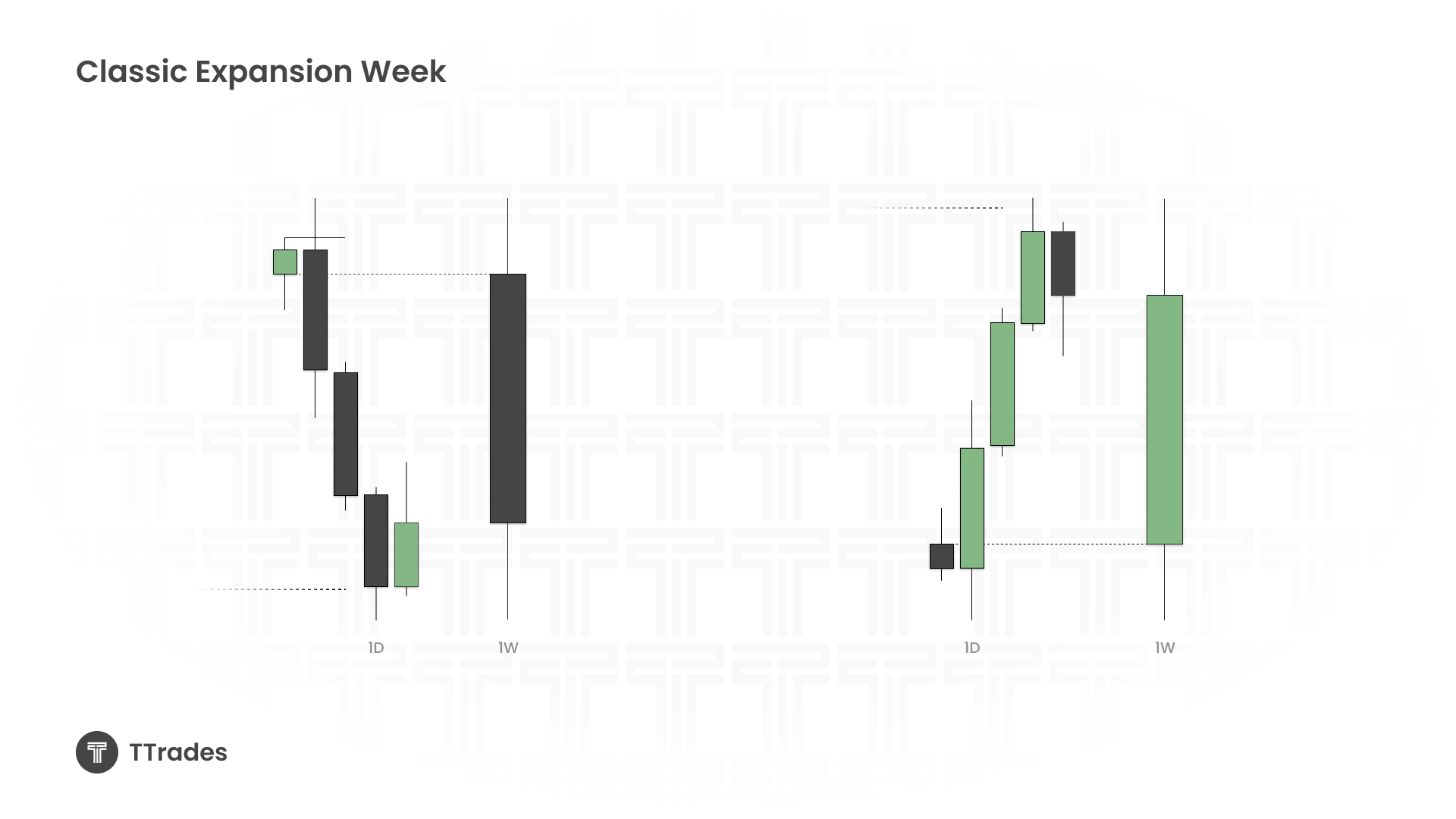
Some weeks will not align cleanly
You may see
- A low form on Monday instead of Tuesday
- Delayed confirmation
- Uneven expansion
The goal is not perfection but identifying the reversal point of the week and trading away from it.
Common Mistakes to Avoid
- Trying to predict the exact day too early
- Entering without confirmation
- Chasing price after multiple expansion days
- Overtrading late in the week
If the move has already happened the opportunity is likely gone.
Final Thoughts
The Classic Expansion Weekly Profile helps align bias, timing and structure
Instead of reacting to every move you
- Let the week reveal direction
- Confirm with structure
- Trade during the strongest phase of expansion
This approach improves both patience and precision in execution.