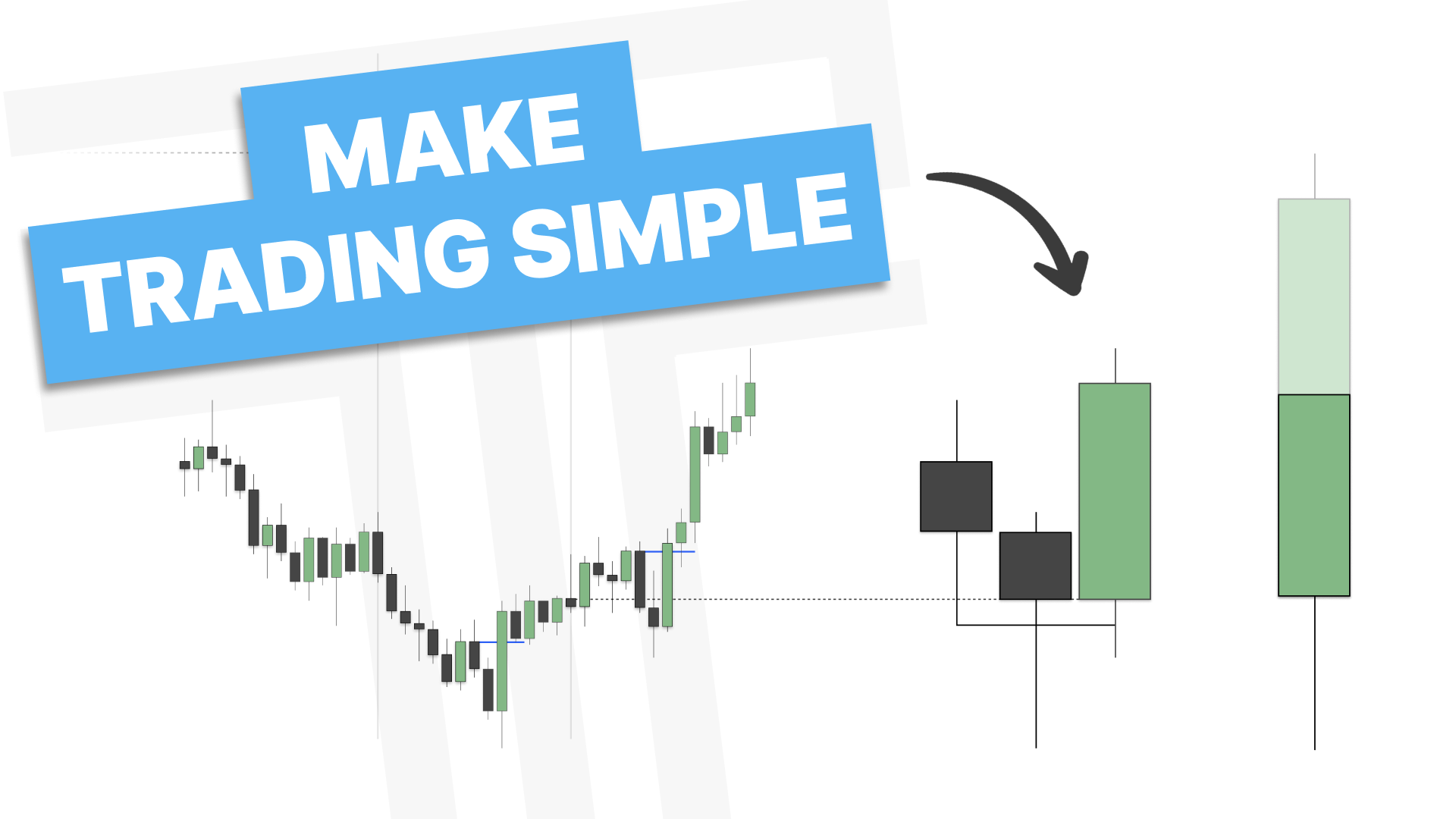

Introduction
Many traders make trading harder than it needs to be. They add more indicators, stack confirmations, and constantly search for new concepts when the real problem is often a lack of structure and execution.
In this guide, we break down how to simplify your trading using the Fractal Model by focusing on daily bias, intraday market structure, candle 2 closures, and trading Candle 3 across multiple timeframes. The goal is simple: align higher timeframe direction with lower timeframe continuation so you can trade expansion without cluttering your charts.
Understanding the Goal of the Fractal Model
The Fractal Model is built around timeframe alignment.
Rather than trying to predict every market move, the objective is to create directional alignment between higher and lower timeframes.
The framework asks four simple questions:
What is the higher timeframe bias?
Has market structure confirmed that direction?
Is a Candle 3 continuation forming across multiple timeframes?
Do we have a protected swing for execution?
When these factors align, expansion becomes more probable.
Start With Daily Bias
Everything starts with the daily chart.
Since intraday price action develops inside the daily candle, establishing higher timeframe bias first creates structure for the rest of the session.
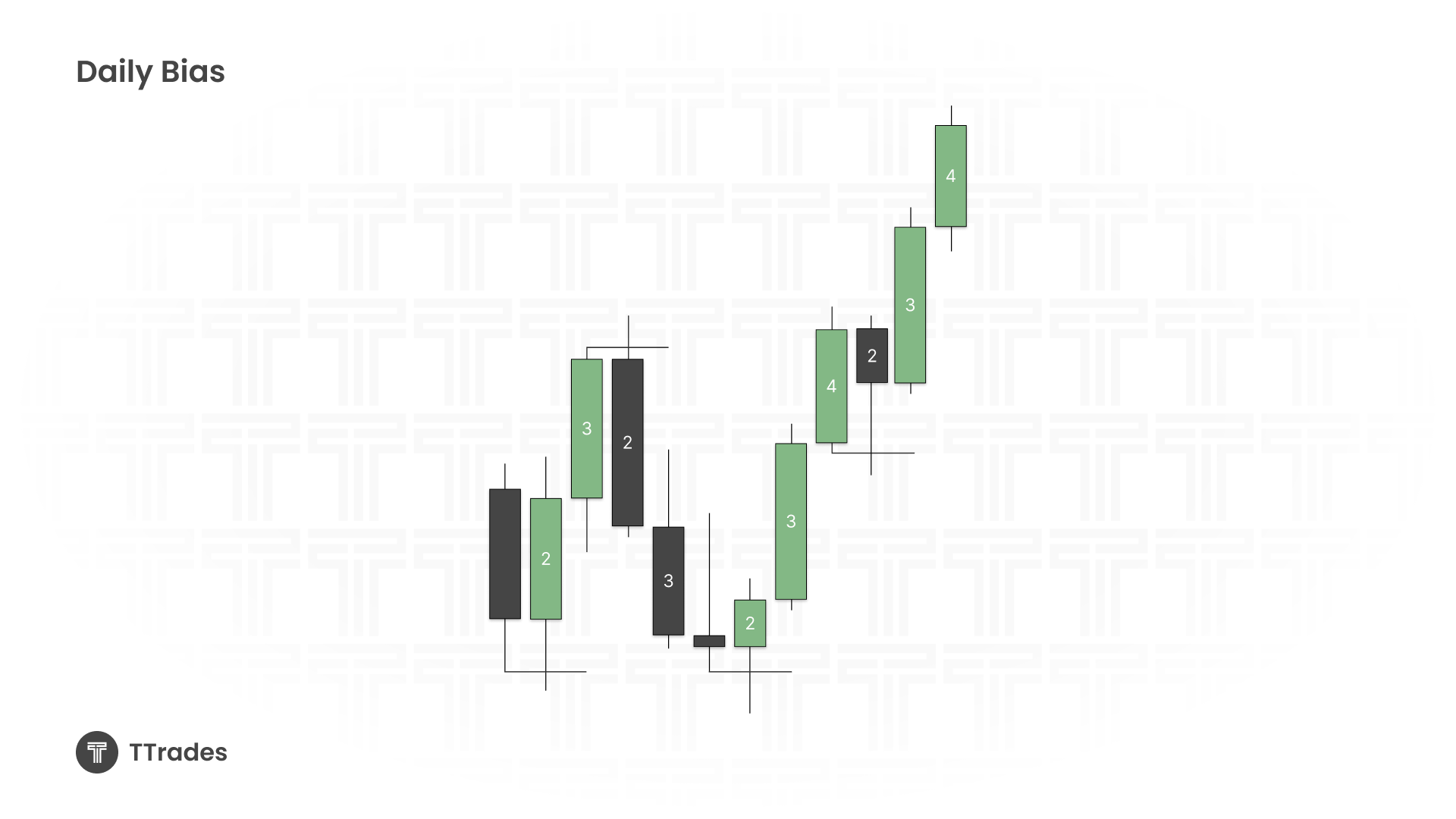
The primary setup begins with a candle 2 closure.
A candle 2 closure occurs when price:
Sweeps a previous high or low
Closes back through that level
Once daily bias is established, lower timeframe confirmation becomes the next step.
Confirm Direction With CISD
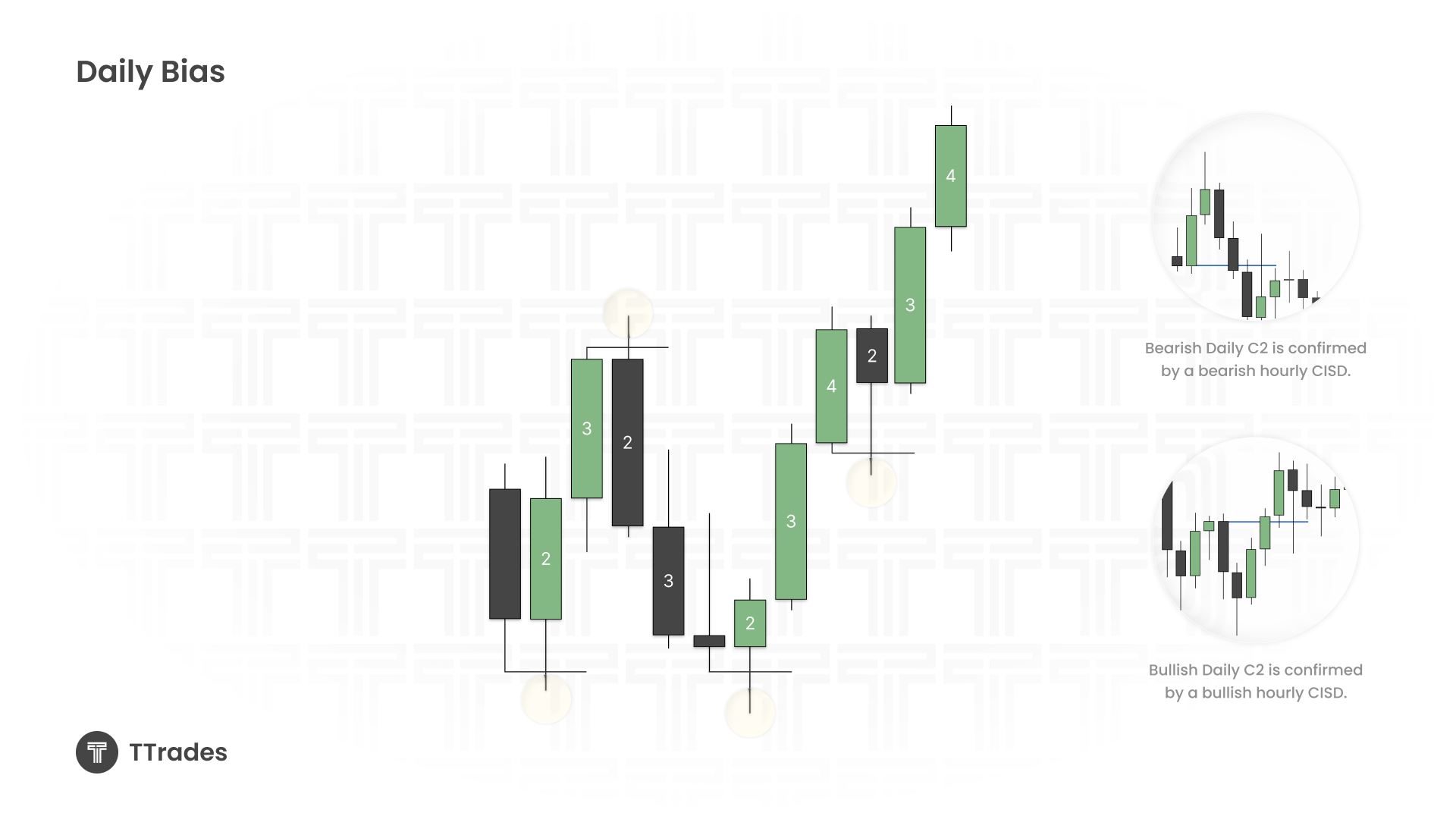
After identifying daily bias, move down to the hourly chart and look for confirmation using a Change in State of Delivery (CISD).
This process involves:
Finding the swing high or swing low
Identifying the series of candles that created the high or low
Waiting for price to close through the series of candles
This confirmation helps validate that the higher timeframe wick has likely formed and continuation is possible.
Building Multi-Timeframe Alignment
After bias is confirmed, execution moves lower.
The process looks like this:
Daily Bias → Four-Hour or Hourly Confirmation → Execution Timeframe
Typical workflow:
Daily chart creates directional bias
Four-hour or hourly chart forms candle 2 closure
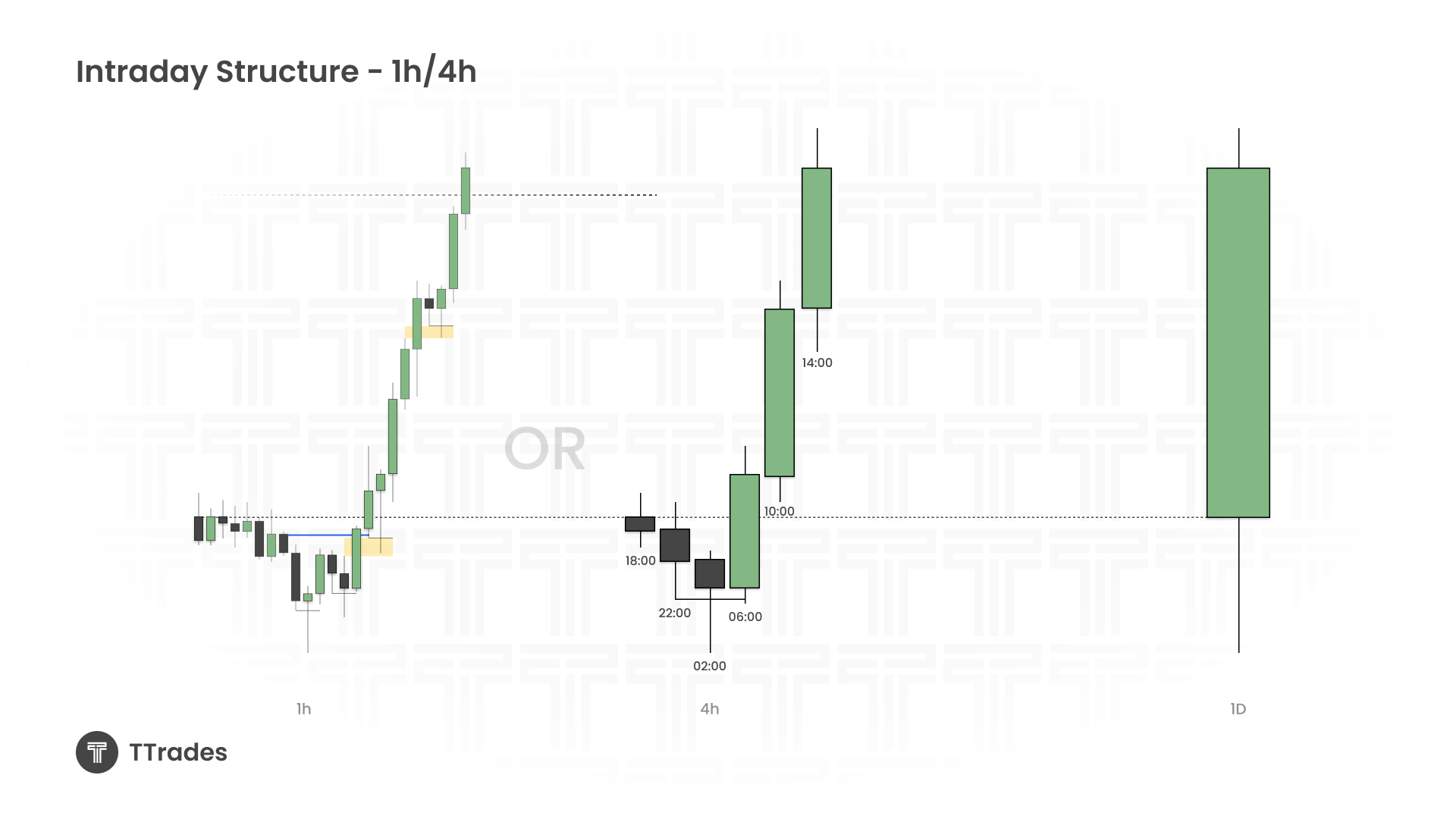
- Lower timeframe creates execution opportunity with a protected swing.
Execution examples:
Four-hour setup → Fifteen-minute entry
Hourly setup → Five-minute entry
The objective is simple: align continuation across multiple timeframes.
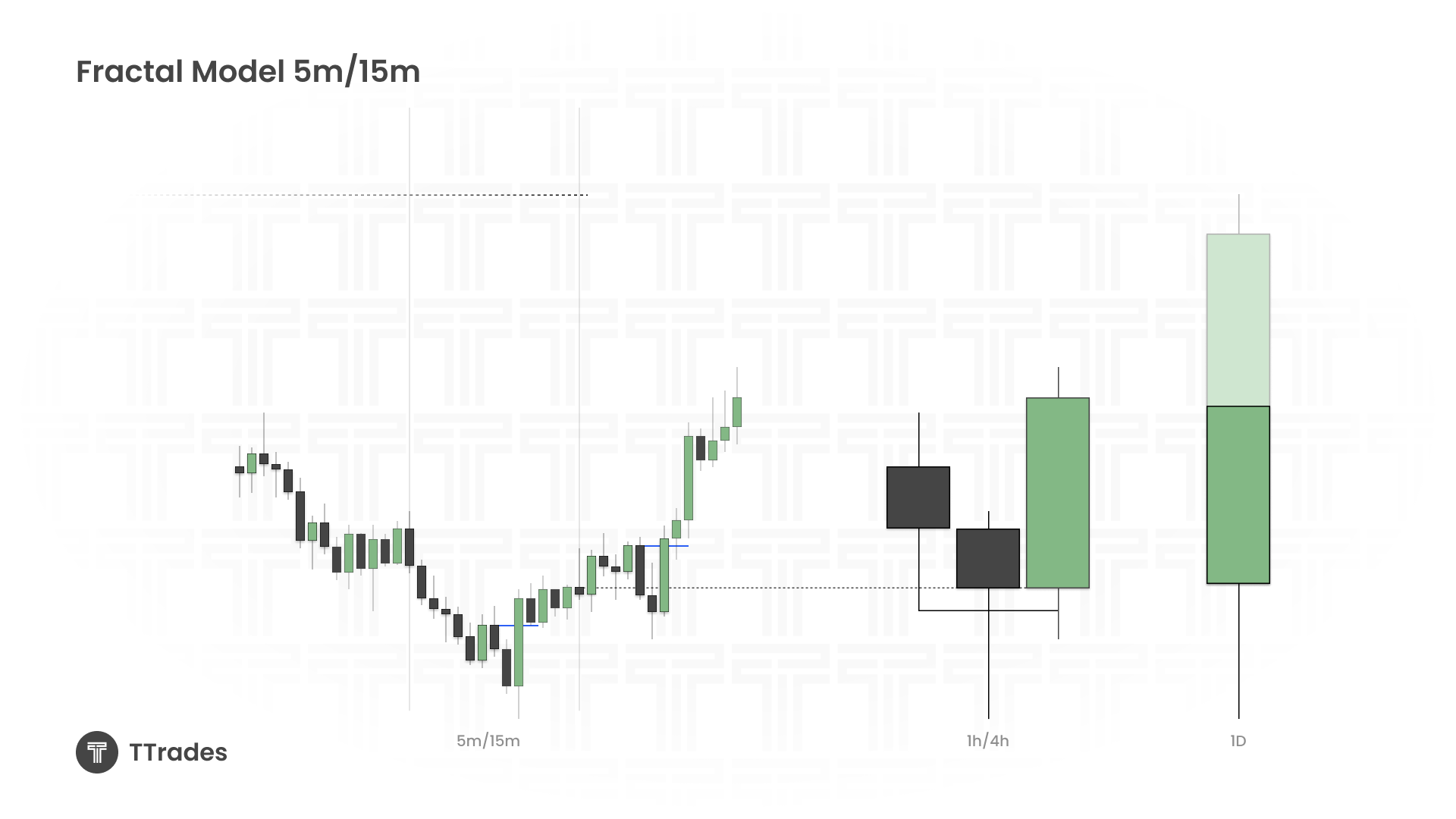
Using Protected Swings for Entries
Protected swings provide structure for both entries and risk management.
Execution remains straightforward:
Allow the wick to form
Wait for continuation structure
Use protected swings for invalidation
Common continuation areas include:
Fair value gaps
Points of interest
Continuation swing points
Why Expansion Trades Work Better With Alignment
The strength of this model comes from stacking continuation together.
For example:
Daily Candle 3 continuation
Four-hour Candle 3 continuation
Lower timeframe continuation from a protected swing
When multiple timeframes point in the same direction, expansion becomes easier to capture.
This does not eliminate losses.
What it does provide is a repeatable framework for identifying higher probability continuation opportunities.
Common Mistakes That Create Complexity
Many traders overcomplicate execution by:
Trading too many concepts simultaneously
Ignoring higher timeframe direction
Entering before confirmation appears
Abandoning systems after normal losses
The goal is not complexity.
The goal is creating a repeatable system built around structure, execution, and consistency.
Conclusion
Trading does not need to become more complicated to become more effective.
The Fractal Model simplifies execution by focusing on higher timeframe bias, intraday structure, Candle 3 continuations, and protected swings across multiple timeframes.
When daily direction aligns with lower timeframe continuation, expansion opportunities become easier to identify and easier to execute consistently.
Instead of adding more concepts, focus on refining the ones that already create structure.