
Introduction
Too many traders struggle with consistency because they bounce from strategy to strategy, always searching for the next best thing. The reality is, consistency doesn’t come from more tools. It comes from committing to one clear system and executing it the same way every time.
In this blog, I’m breaking down the only trading strategy you need for 2026. The Fractal Model is built on market structure, swing points, and multi time frame alignment. It’s simple, repeatable, and designed to keep you focused instead of reactive.
The Core Idea Behind the Fractal Model
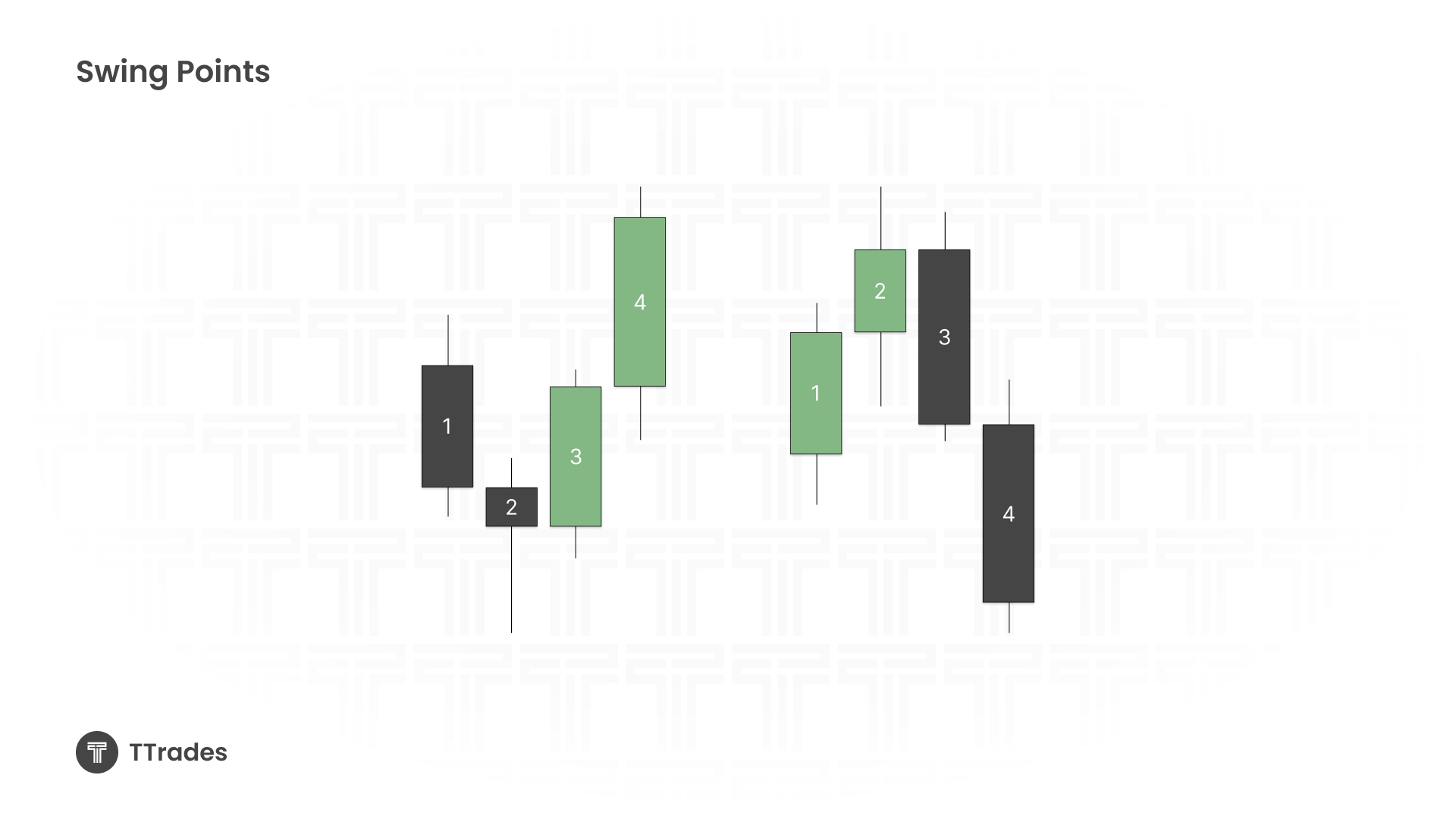
This strategy is built on one foundational principle. Price cannot reverse without forming a swing point.
A move from bearish to bullish must form a bullish swing point.
A move from bullish to bearish must form a bearish swing point.
If you learn how to identify these swing points, and where they form, you can anticipate expansion instead of chasing it. This behavior repeats across all time frames, which is why this model is fractal in nature.
Step One: Establish a Daily Bias
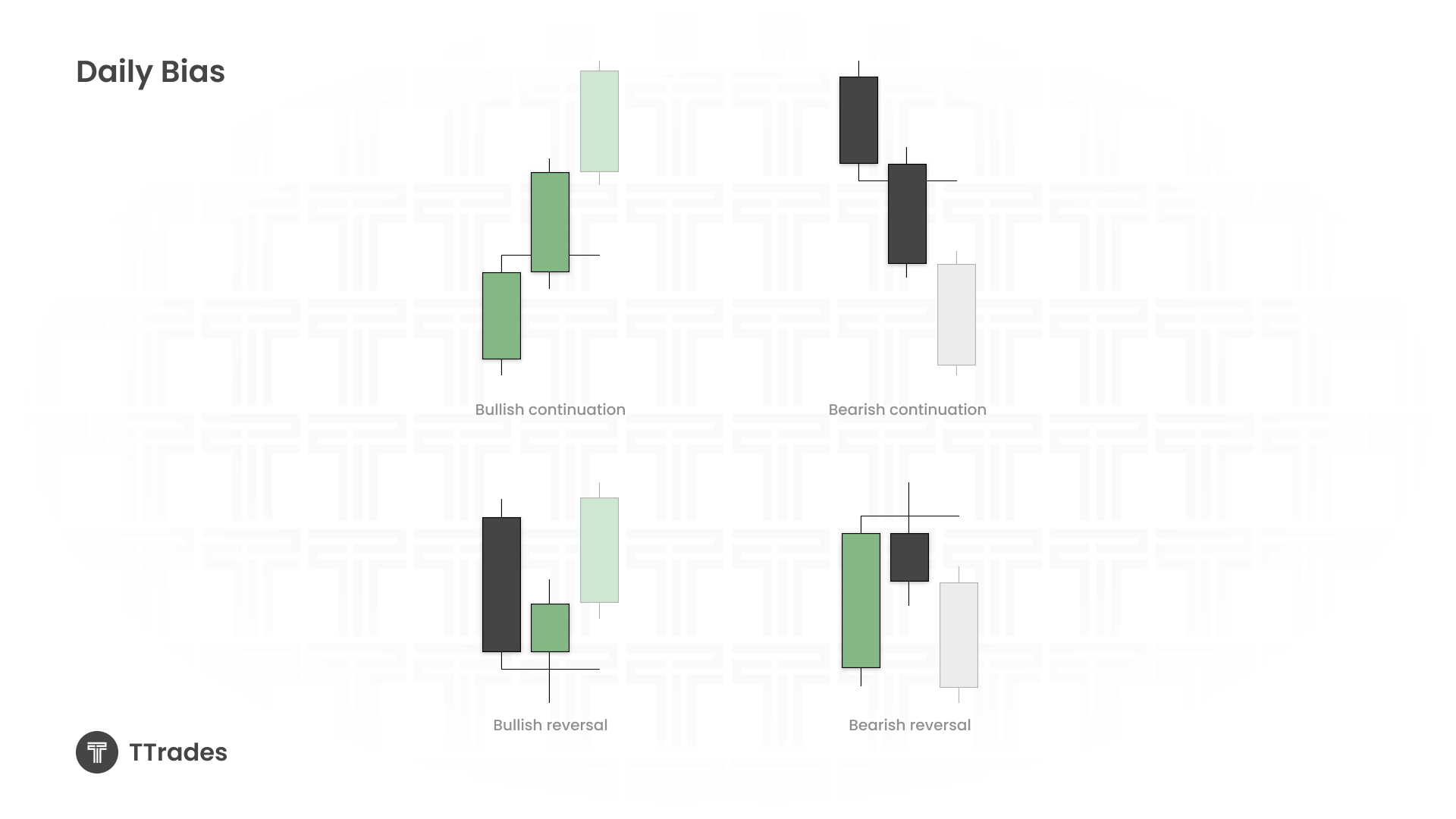
Before you ever drop down to lower time frames, you must come into the day with a clear directional bias. This is determined by the daily candle close relative to the previous day’s range.
If price closes above the previous day’s high, I’m looking for bullish continuation.
If price closes below the previous day’s low, I’m looking for bearish continuation.
For reversals, the logic changes slightly.
If price sweeps the previous day’s low and closes back above it, that signals a bullish reversal.
If price sweeps the previous day’s high and closes back below it, that signals a bearish reversal.
Once the daily bias is set, every trade idea must align with it.
Step Two: Identify Points of Interest
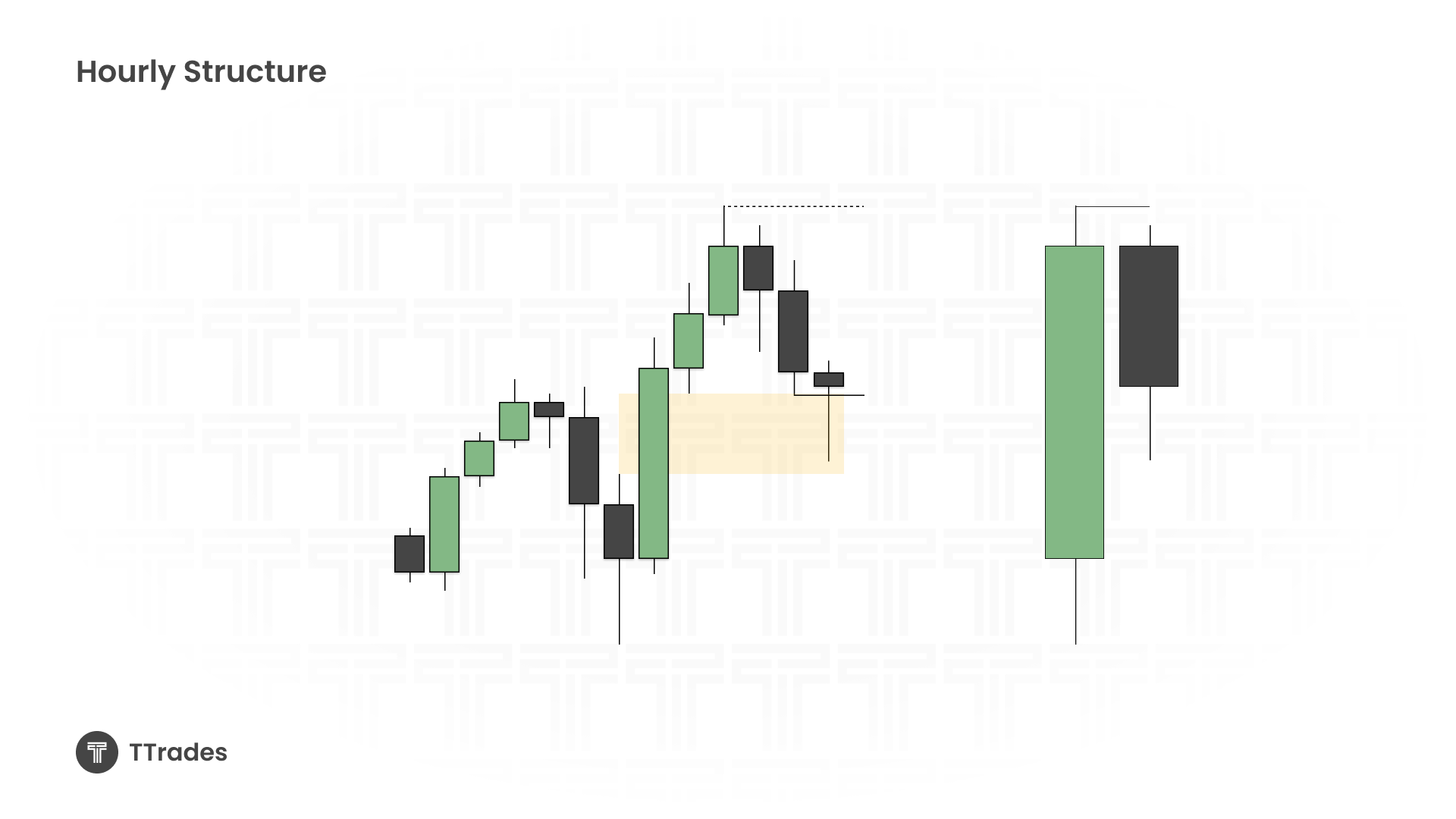
After bias is established, the next step is finding where price is likely to react from.
Points of interest are very simple.
Fair value gaps.
Previous highs or previous lows.
In bullish scenarios, I focus on fair value gaps and lows.
In bearish scenarios, I focus on fair value gaps and highs.
I want to see price retrace into one of these areas and form a Candle 2 or Candle 3 closure.
Step Three: Lower Time Frame Confirmation
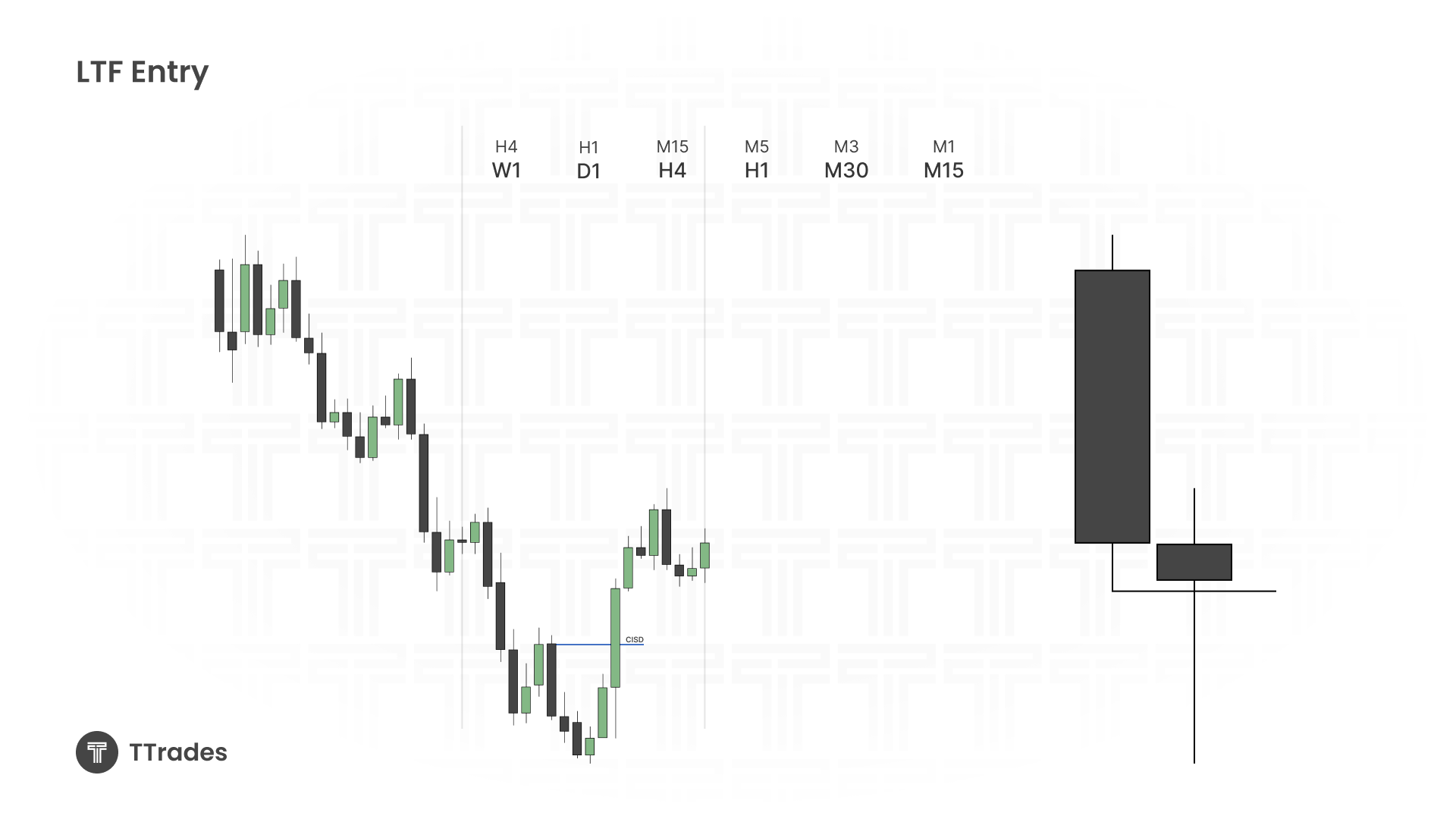
After structure is confirmed, I drop to a lower time frame using time frame alignment.
Here look for a Change in the state of delivery (CISD).
The lower time frame is where execution happens, but only after higher time frames are aligned.
Step Four: Enter on Continuation
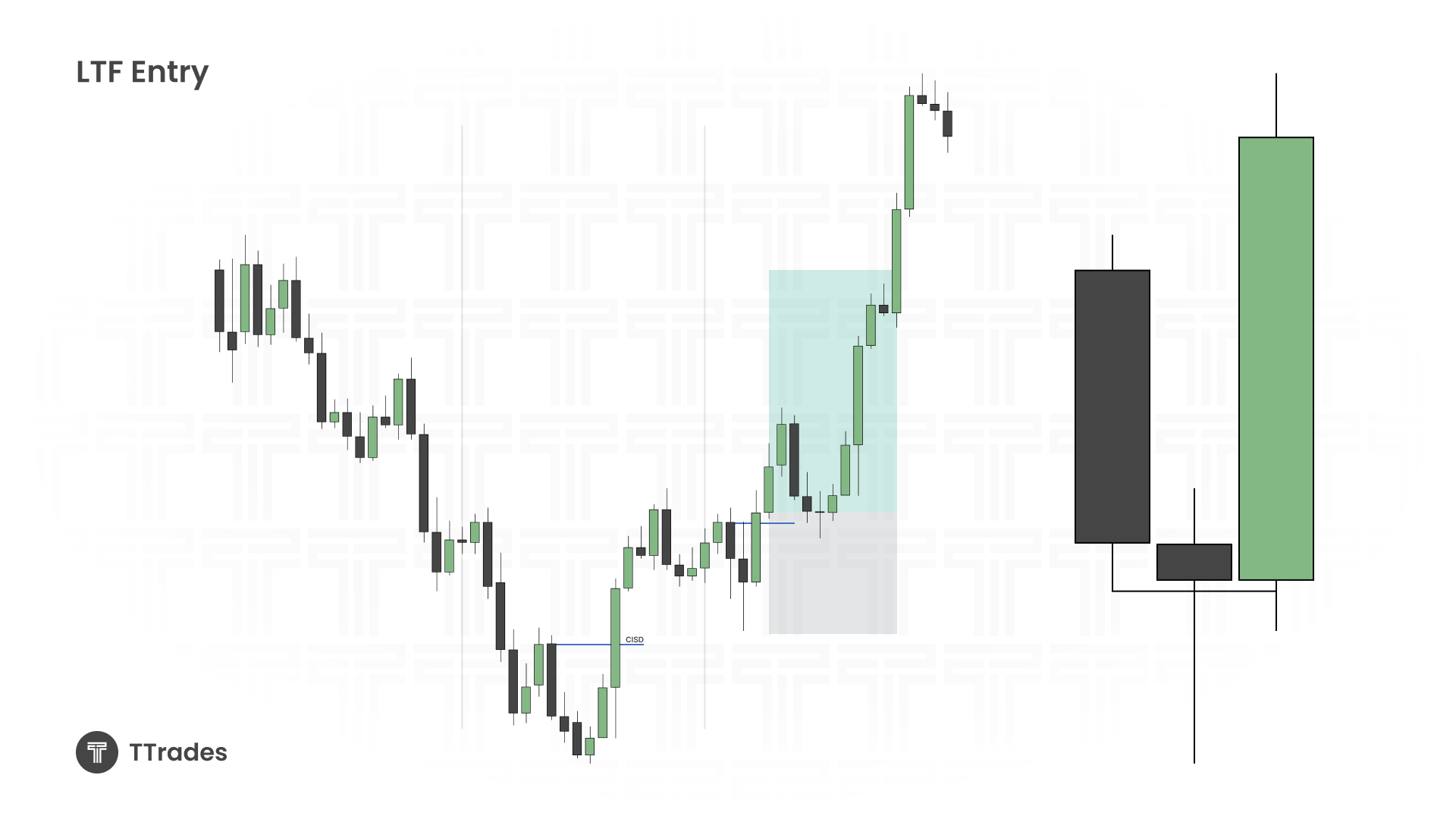
After confirming the CISD, look for a continuation order block.
This forms when price sweeps a short term high or low and then closes through a series of opposing candles.
Once this forms, entry can be taken on the close or on the retest.
Stops are placed above or below the protected swing.
The initial target is two R, with optional higher time frame objectives.
This is where expansion typically occurs.
Example: Bearish Fractal Alignment
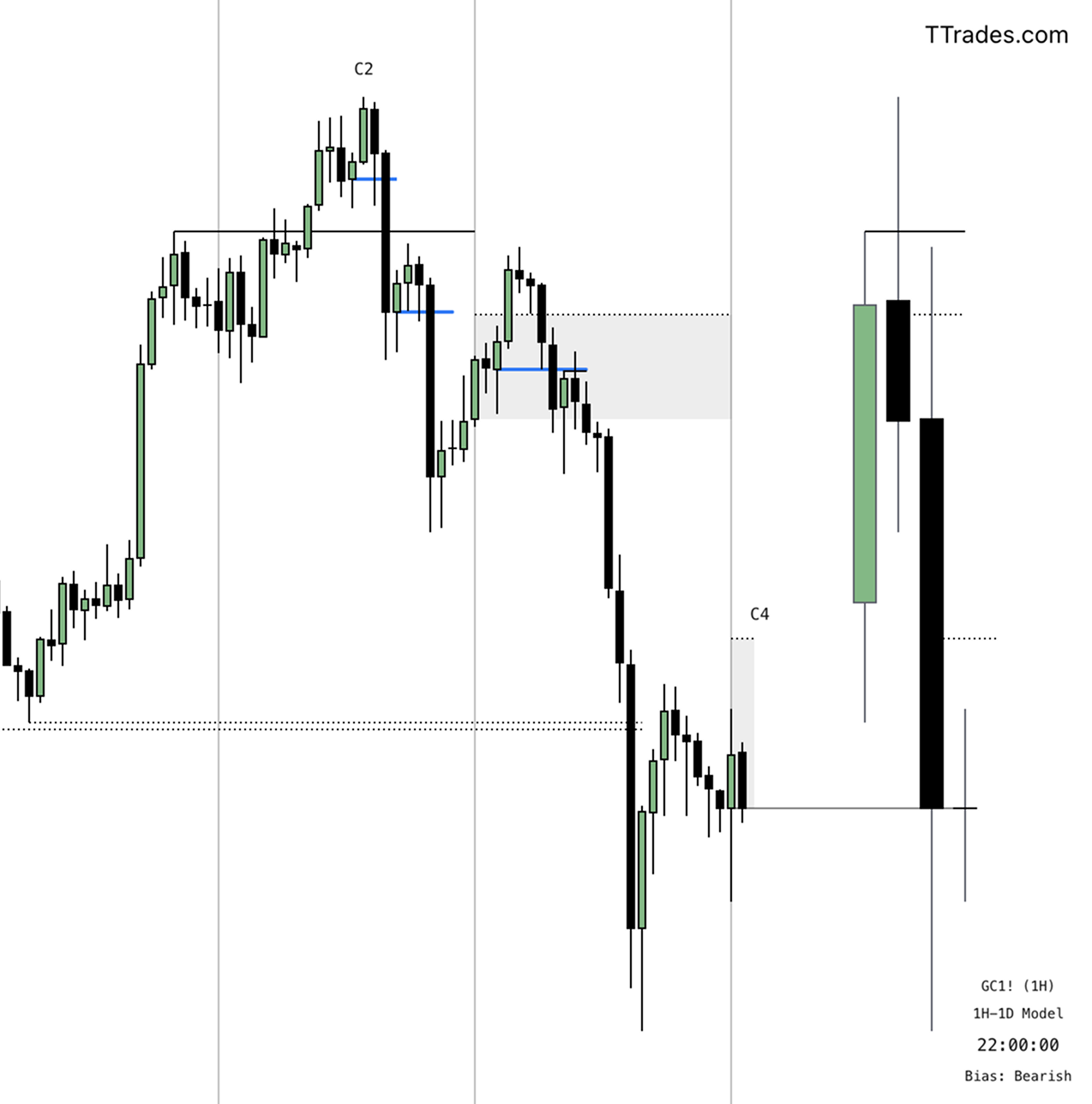
In a bearish example, the daily chart forms a reversal closure, giving a bearish bias.
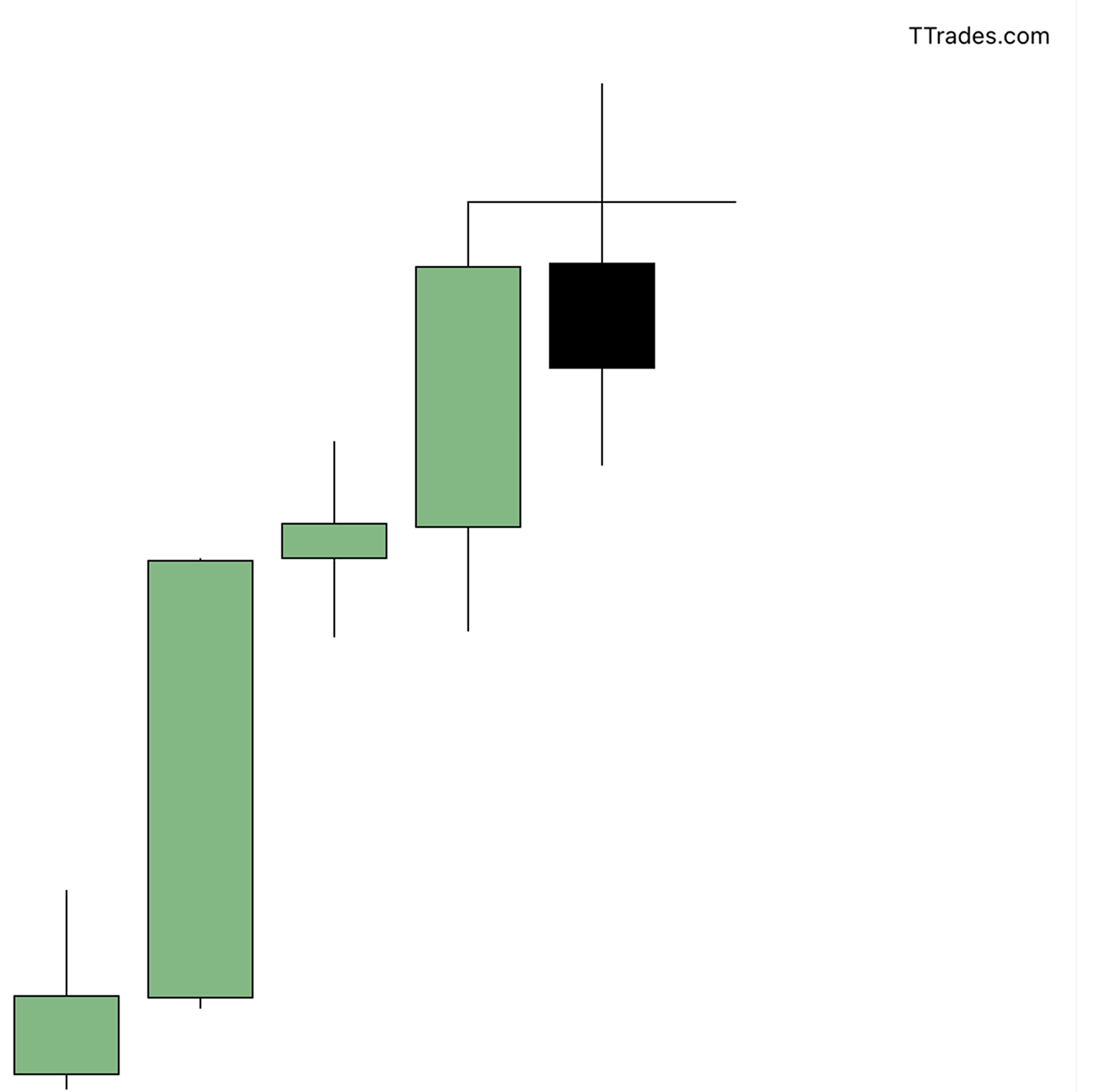
The hourly chart confirms the swing with a change in the state of delivery. Then in the current day, price forms a “V shape” reversal confirming the high of the current day. Following this, there is a candle 2 closure in a small fair value gap and retesting an opposing candle.
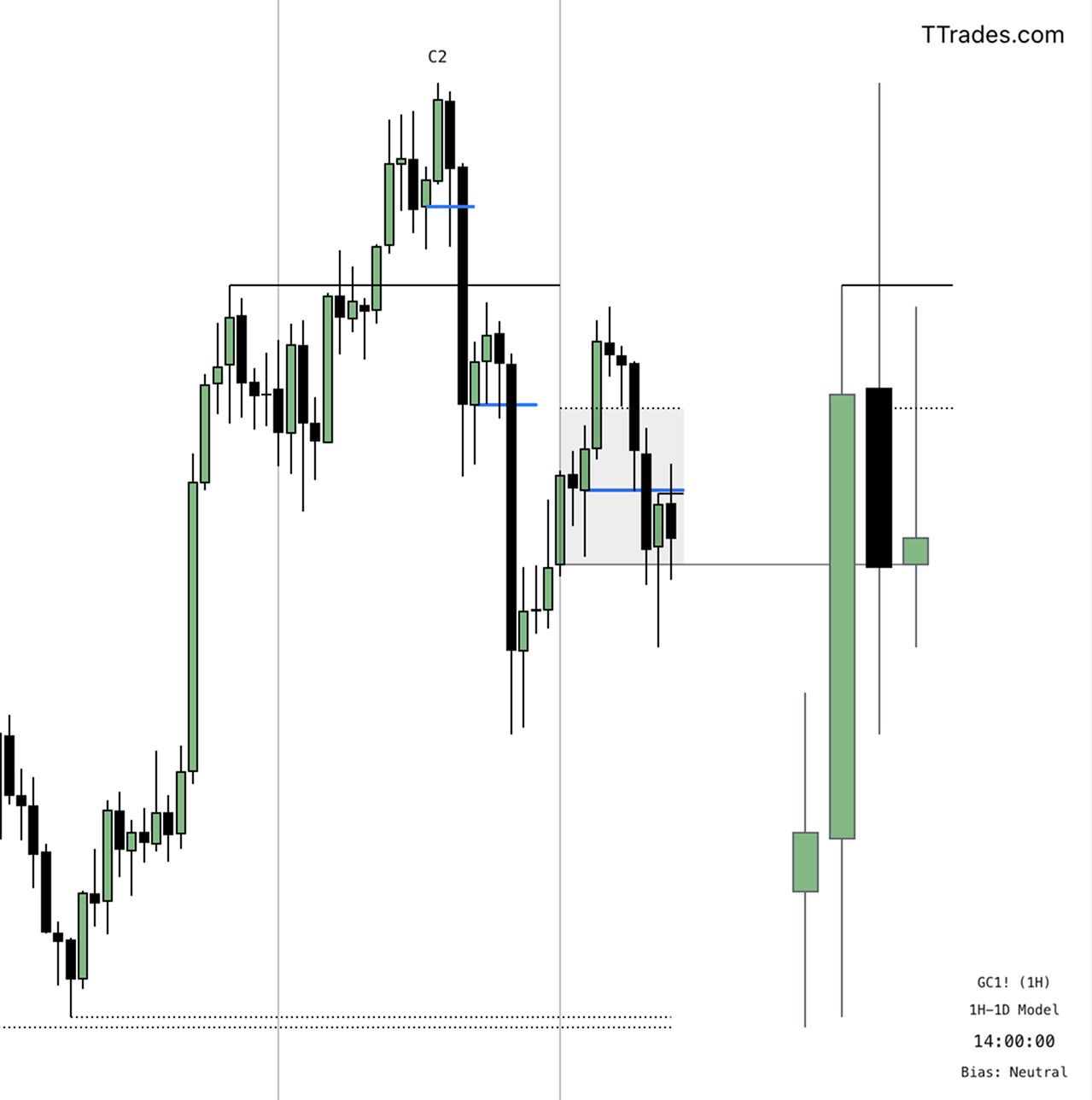
Moving to the lower timeframe, entry on the retest of the continuation order block. An entry on the retest or closure is valid.
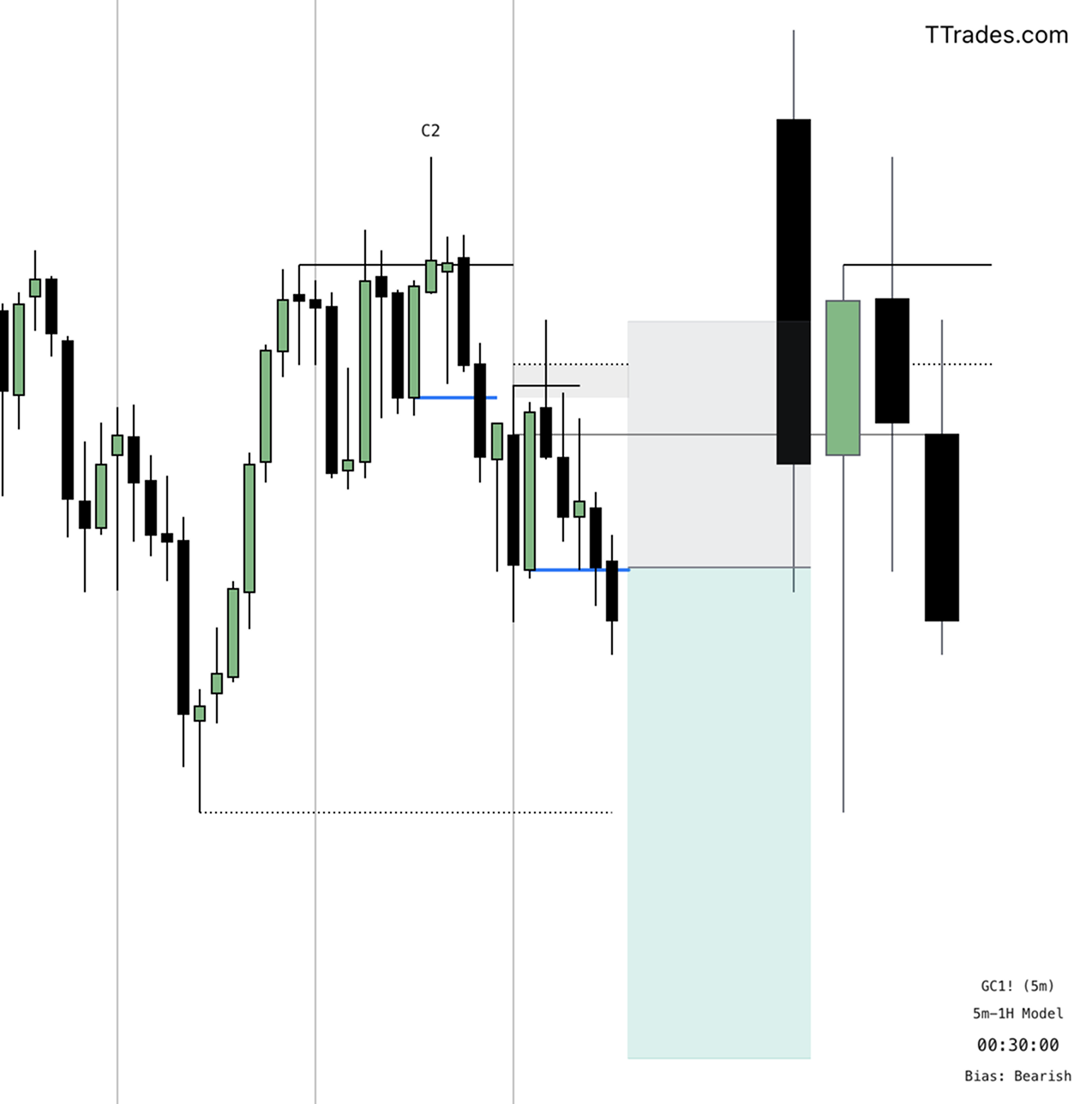
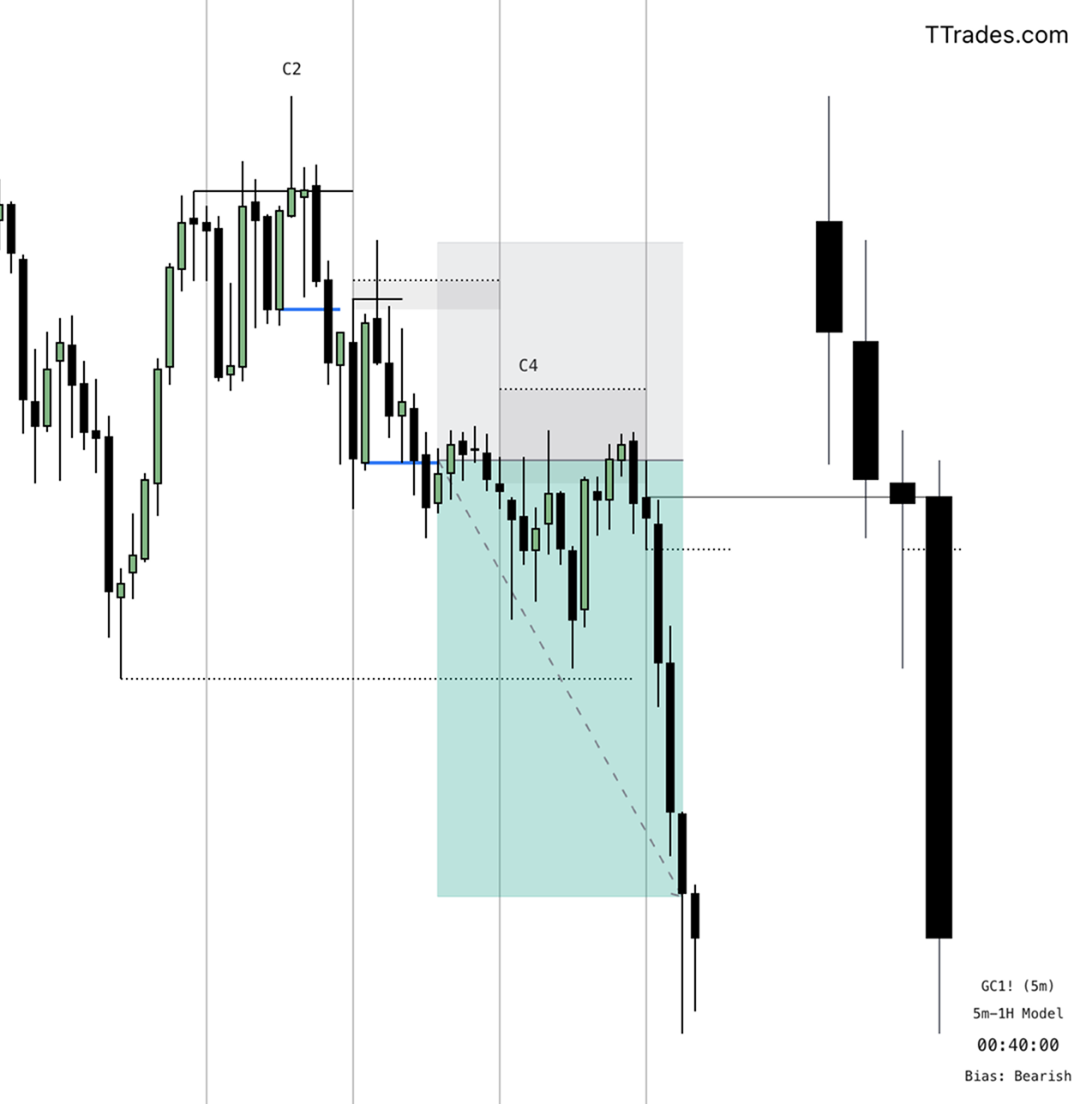
With the daily, hourly, and lower time frames all aligned bearish, price expands cleanly. These are the highest quality trade environments.
When Not to Trade
Not every market condition is tradable.
If price fails to form continuation multiple times, becomes choppy or range bound, or shows messy structure with no clear swing, then the best trade is no trade.
Consolidation should be avoided until a range high or range low is taken and structure becomes clear again.
Final Thoughts
This strategy works because it forces discipline and alignment.
You are trading with a defined daily bias.
You are using structure to confirm direction.
You are entering only on continuation.
You are aligning multiple time frames in one direction.
If you commit to this one system and execute it consistently, you eliminate confusion, overtrading, and emotional decision making.
This is the only trading strategy you need for 2026, not because it is complex, but because it is repeatable.