Introduction
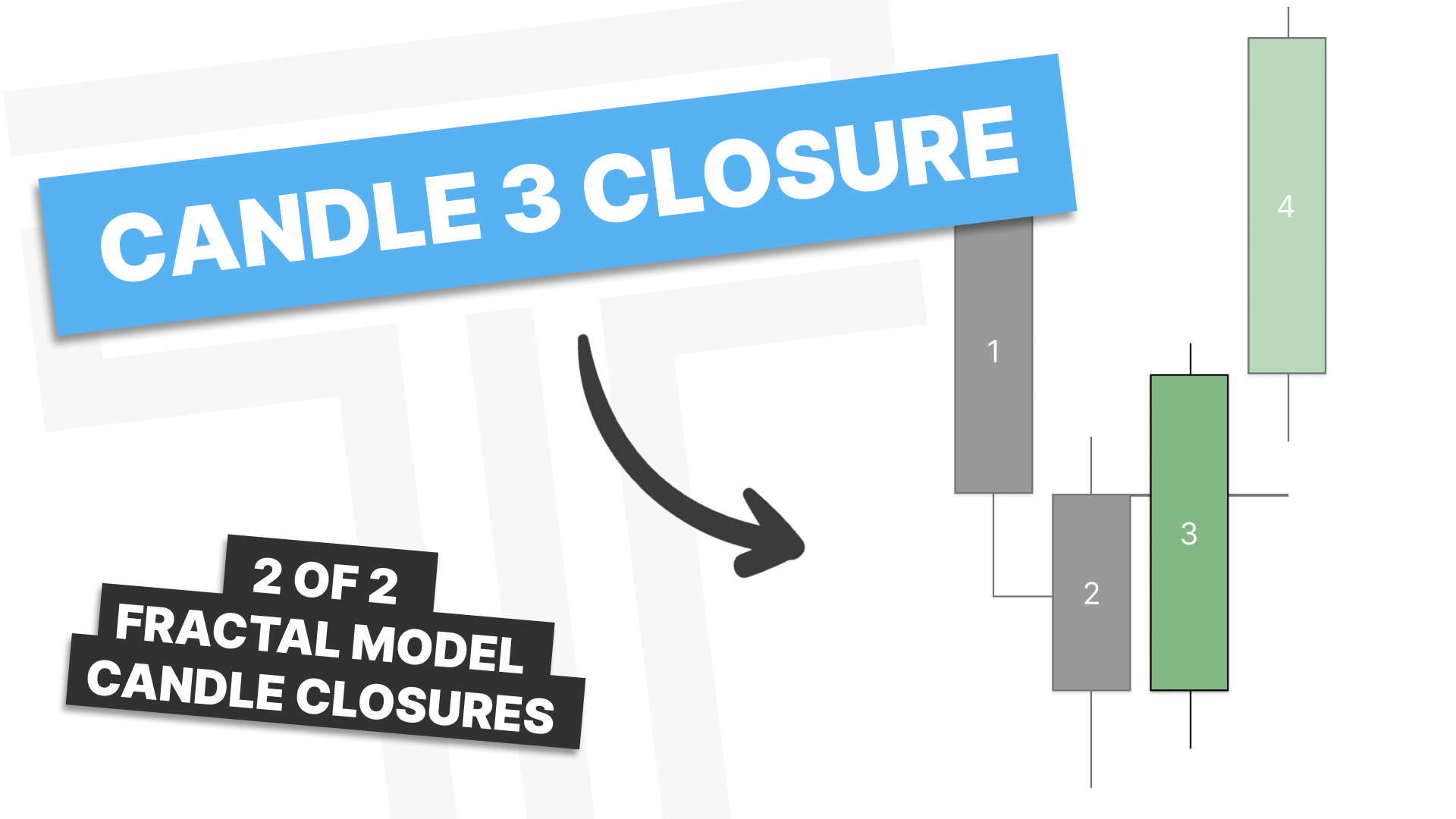
Candle 3 closure is the second closure type in the TTrades Fractal Model. If you already understand candle 2 closures, this lesson will expand your knowledge, providing you with all the information regarding candle closure types.
This guide breaks everything down in a simple way so you can apply it immediately on your charts.
Understanding Continuation vs. Reversal Closures
Before identifying candle 3 closures, you must understand the two types of closures.
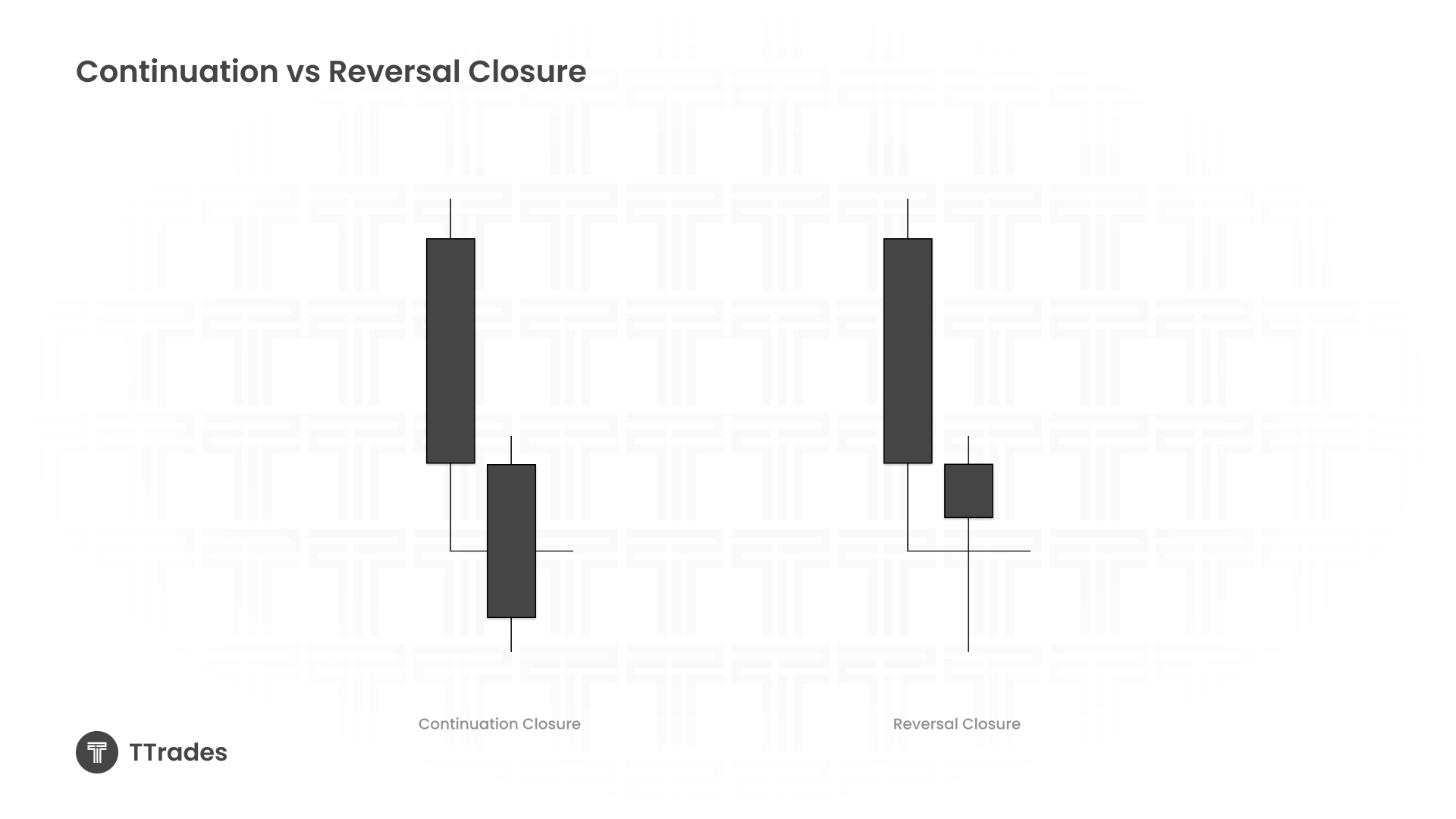
• Continuation Closure
When price takes out the previous candle’s high or low and closes beyond it.
For example: price sweeps the previous low and closes below that low.
This signals that the trend is likely to continue.
• Reversal Closure
When price sweeps the previous candle’s high or low but closes back inside the previous candle’s range.
Example: price sweeps a low but closes back above it.
This provides evidence for a potential reversal move.
These closure types create the foundation for identifying candle 2 and candle 3 closures.
Candle 2 vs. Candle 3 Closure
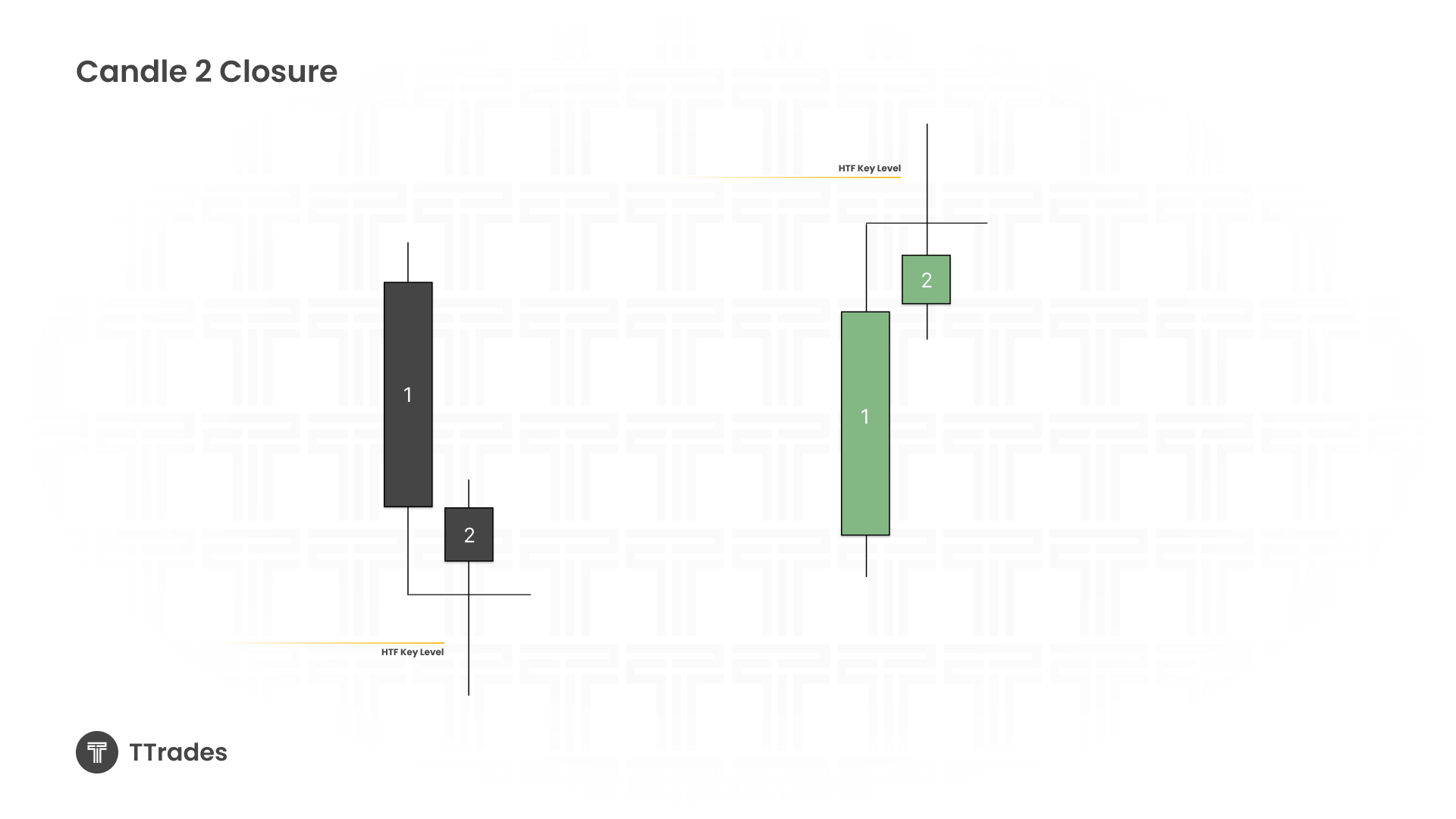
A candle 2 closure occurs when the reversal condition happens during candle 2.
A candle 3 closure occurs when candle 2 fails to give the required closure, forcing you to wait for candle 3.
Here is the core difference:
• Candle 2 closure:
Price sweeps the previous candle and closes back inside, which confirms the reversal early.
• Candle 3 closure:
Price does not sweep the previous candle, yet candle 3 closes over the body of candle 2 and engulfs it.
This delayed confirmation still signals a reversal or continuation depending on context.
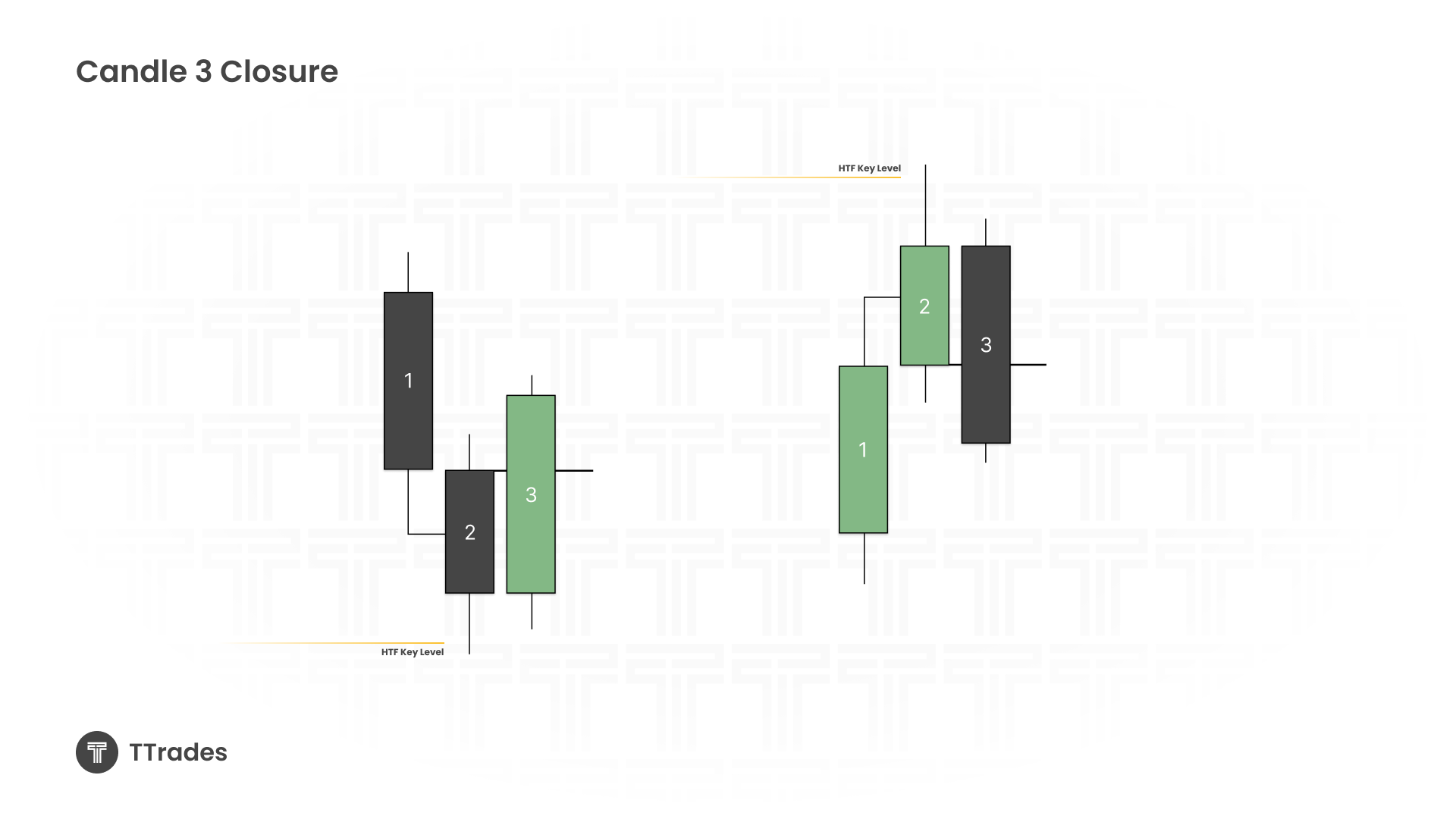
When Candle 2 Fails, Candle 3 Can Still Confirm
Sometimes price hits your point of interest: a fair value gap, imbalance, or key level but does not form a reversal closure in candle 2.
In this situation, you wait for candle 3 to give one of these conditions:
• In a bullish scenario, candle 3 closes over the body of candle 2.
• In a bearish scenario, candle 3 closes below the body of candle 2.
When this happens without sweeping the candle 2 high or low, it becomes a candle 3 closure.
This allows you to anticipate candle 4 as the expansion candle.
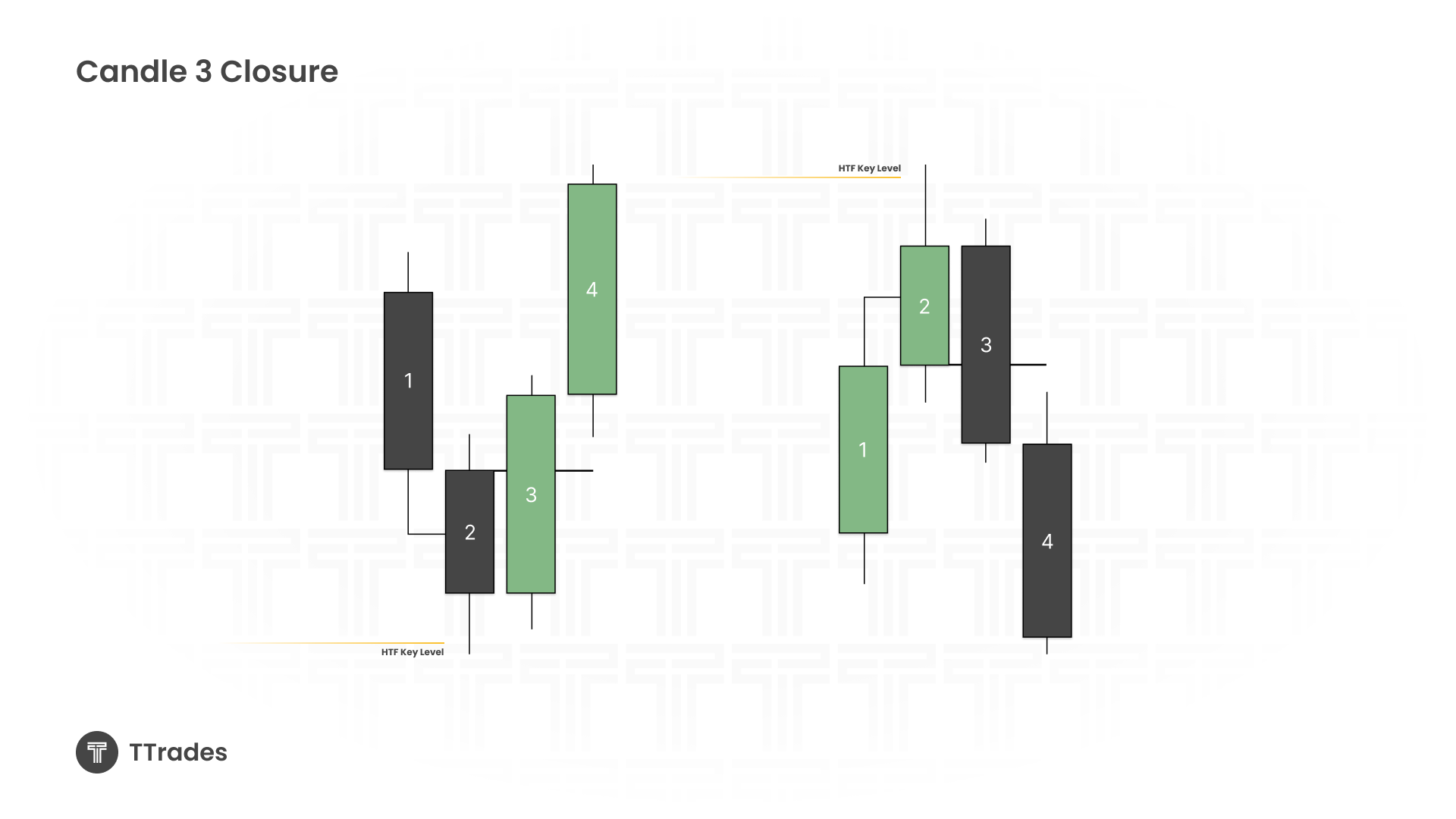
Using Equilibrium With Candle 3 Closures
After identifying a valid candle 3 closure, mark the full range of candle 3.
• In a bullish setup, look for candle 4 to wick into the upper half of candle 3.
• In a bearish setup, look for candle 4 to wick into the lower half of candle 3
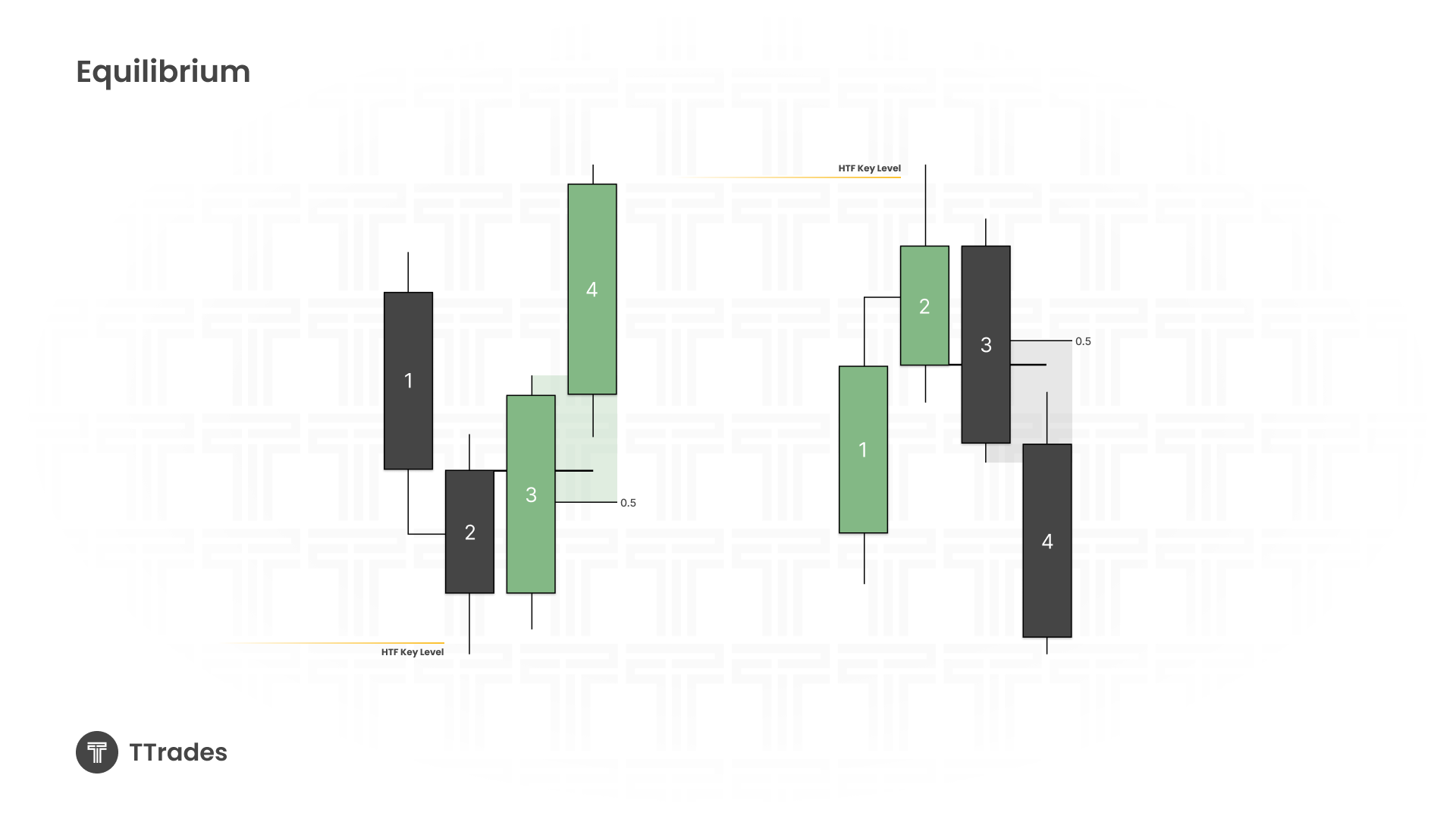
This equilibrium behavior adds precision to entries and confirms that the expansion move is likely underway.
Chart Examples and How They Apply
In the NQ example below, price reaches a point of interest but does not give a candle 2 closure. Wait for candle 3 to either form a candle 3 closure and anticipate a candle 4 continuation.
A swing is only valid when it has both:
• A point of interest
• A valid closure (candle 2 or candle 3)
If either is missing, the swing point is ignored.
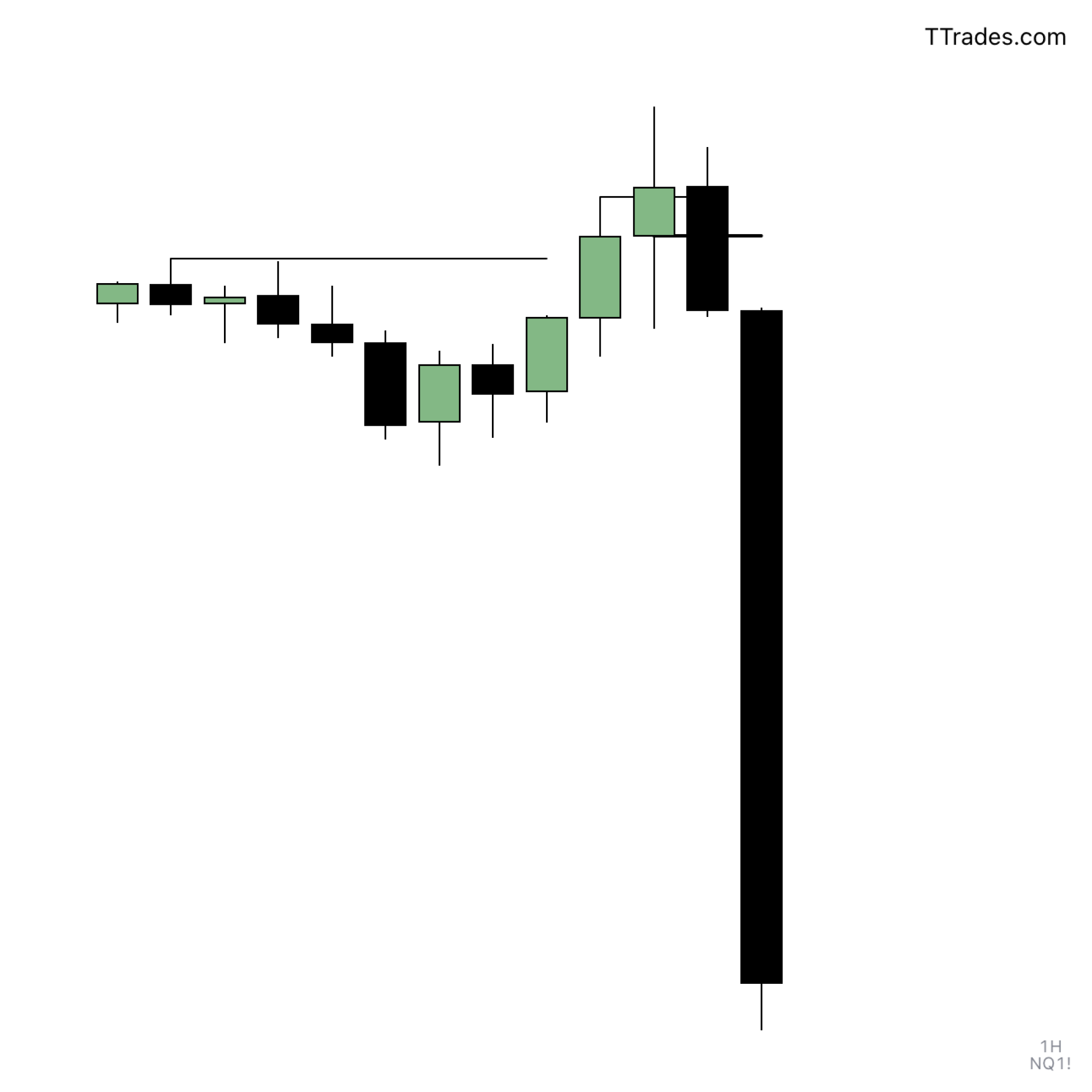
How to Frame Trades From Candle 3 Closures
Once a candle 3 closure forms, follow a simple process:
• Mark the entire candle 3 range.
• Identify the equilibrium
• Drop to a lower timeframe, such as 4-Hour to 15-Minute.
• Wait for displacement and a refined entry within that half.
This workflow keeps your trades structured and avoids guesswork.
Final Thoughts
Candle 3 closures are a powerful addition to your model. They create structure when a candle 2 closure does not form and offer clean continuation when paired with equilibrium. By combining closures, points of interest, and filtering out invalid swing points, You end up with a consistent framework for cutting out noise and focusing on clean, high-probability setups.