
Introduction
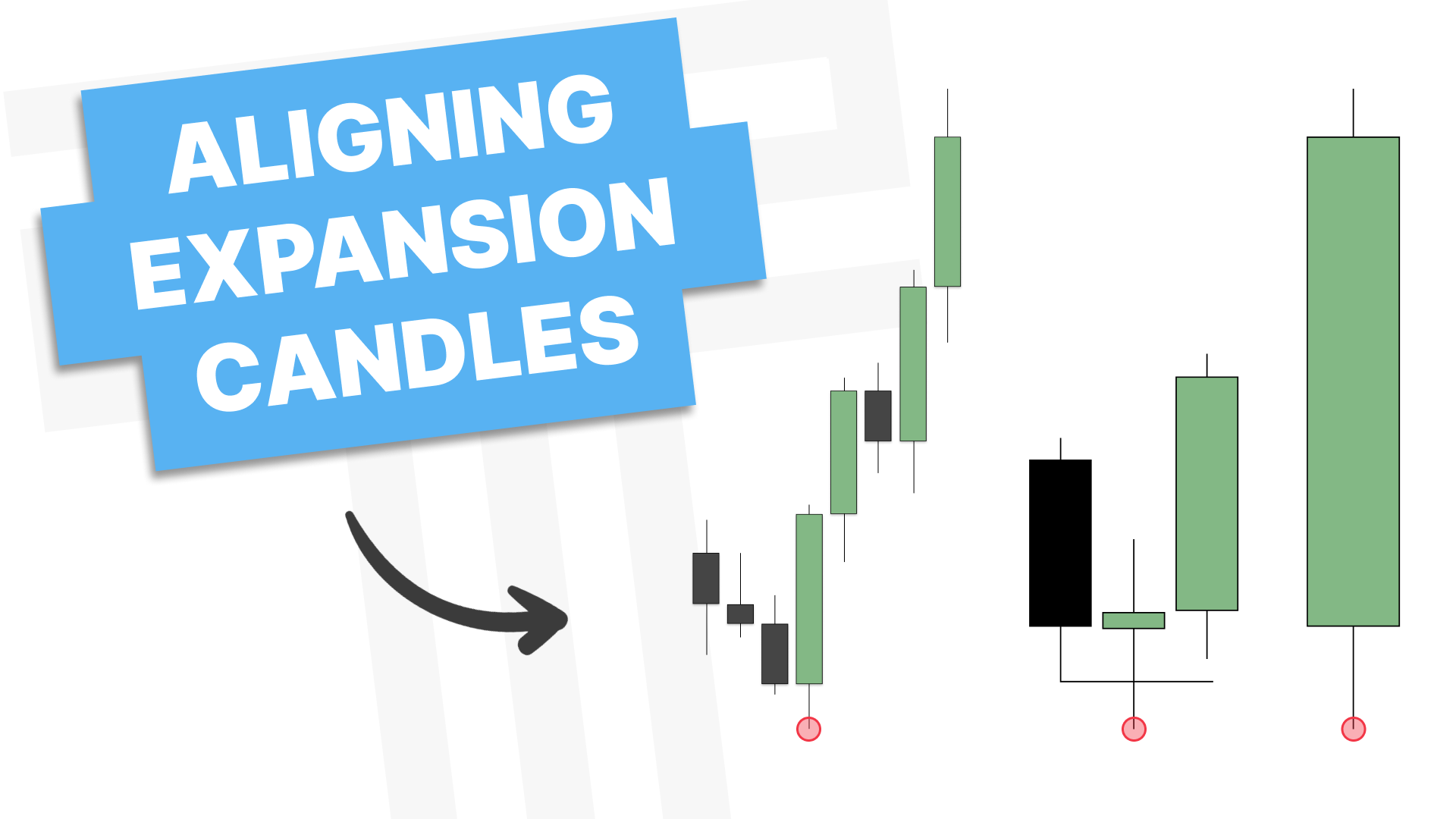
When a real trend forms, candles are not opposing each other, they are aligned. This concept of aligning expansion candles is one of the simplest ways to understand why some moves trend cleanly while others stall. In this blog, we’ll break down how wick size affects expansion, how to read candle intent, and how aligning multiple timeframes creates high-probability trends.
What It Means for a Candle to Support Expansion
Before alignment matters, you need to understand what an expansion candle actually is.
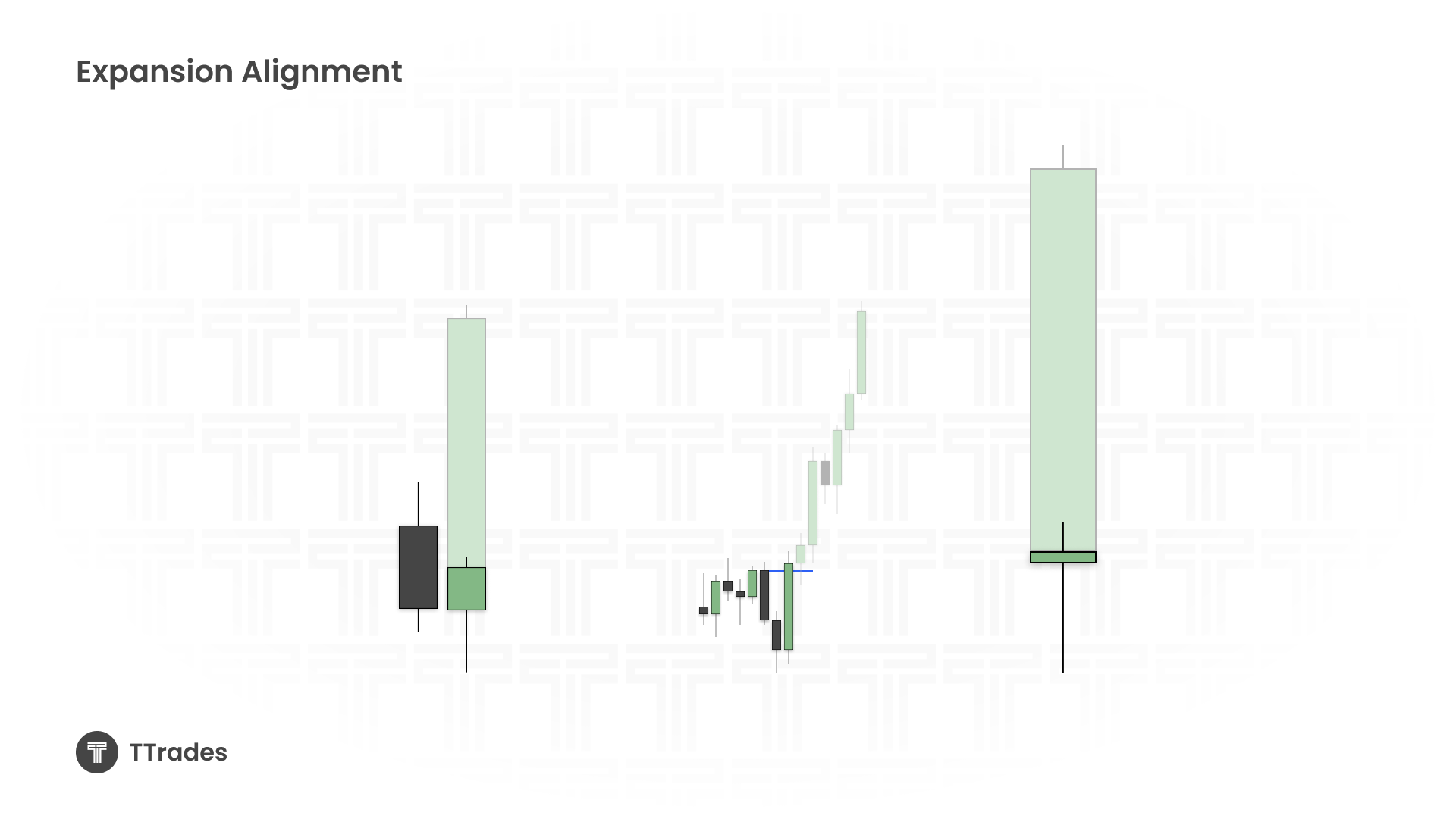
A candle that supports expansion has a large body and a small wick on the opposing side. This tells you price did not spend much time moving against the direction of the candle. It opened, made a small opposing run early, leaving enough time and range for expansion.
A candle that does not support expansion usually has a large wick or a strong opposing move before continuation in the intended direction. When price opens and makes a large opposing run, that candle loses its ability to trend efficiently.
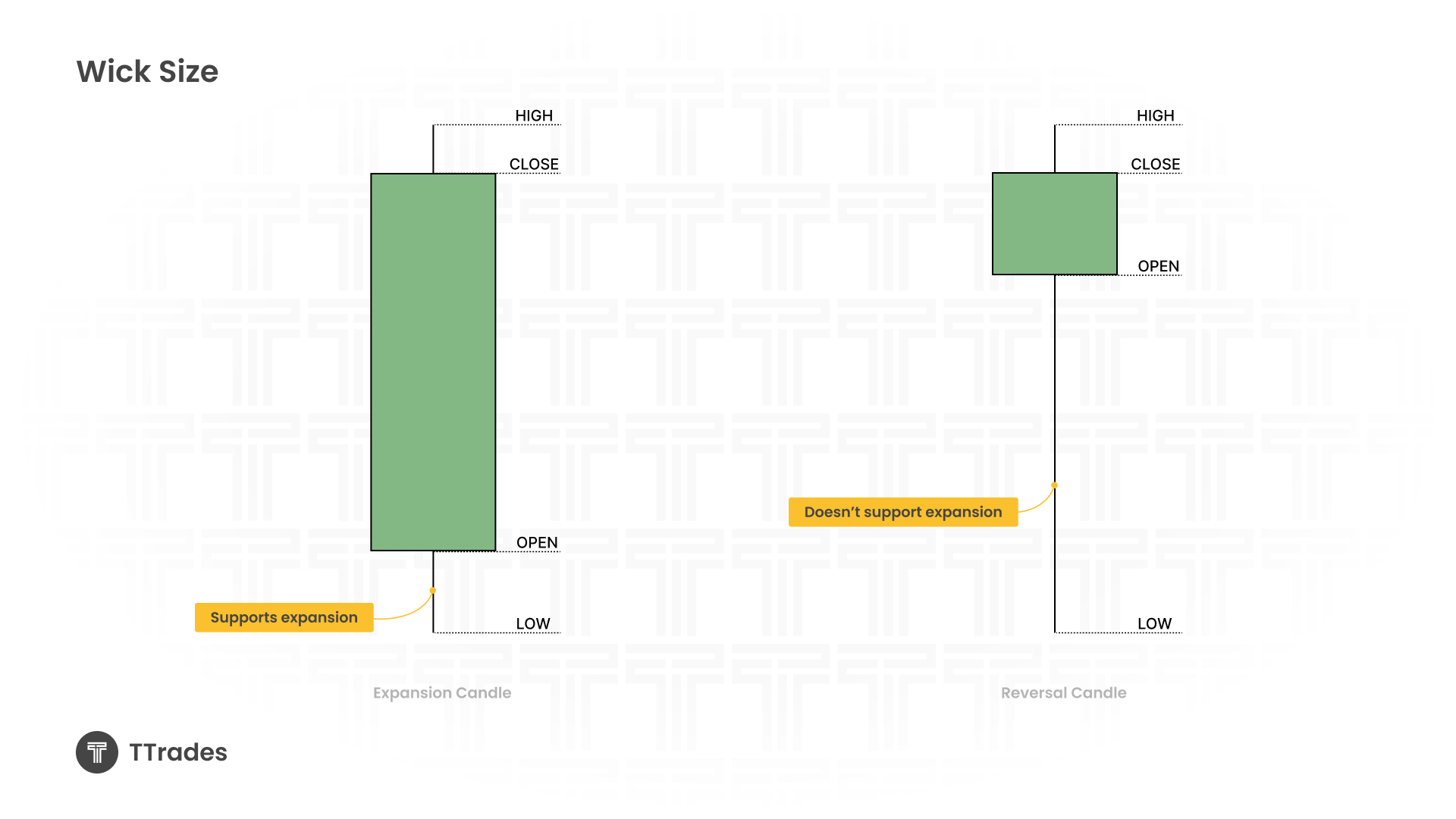
In a bullish example, an expansion candle opens, forms a small lower wick early, and then trends higher for the rest of the candle. If price opens and sells off heavily first, it limits how far price can expand upward.
Aligning Expansion Candles Across Timeframes
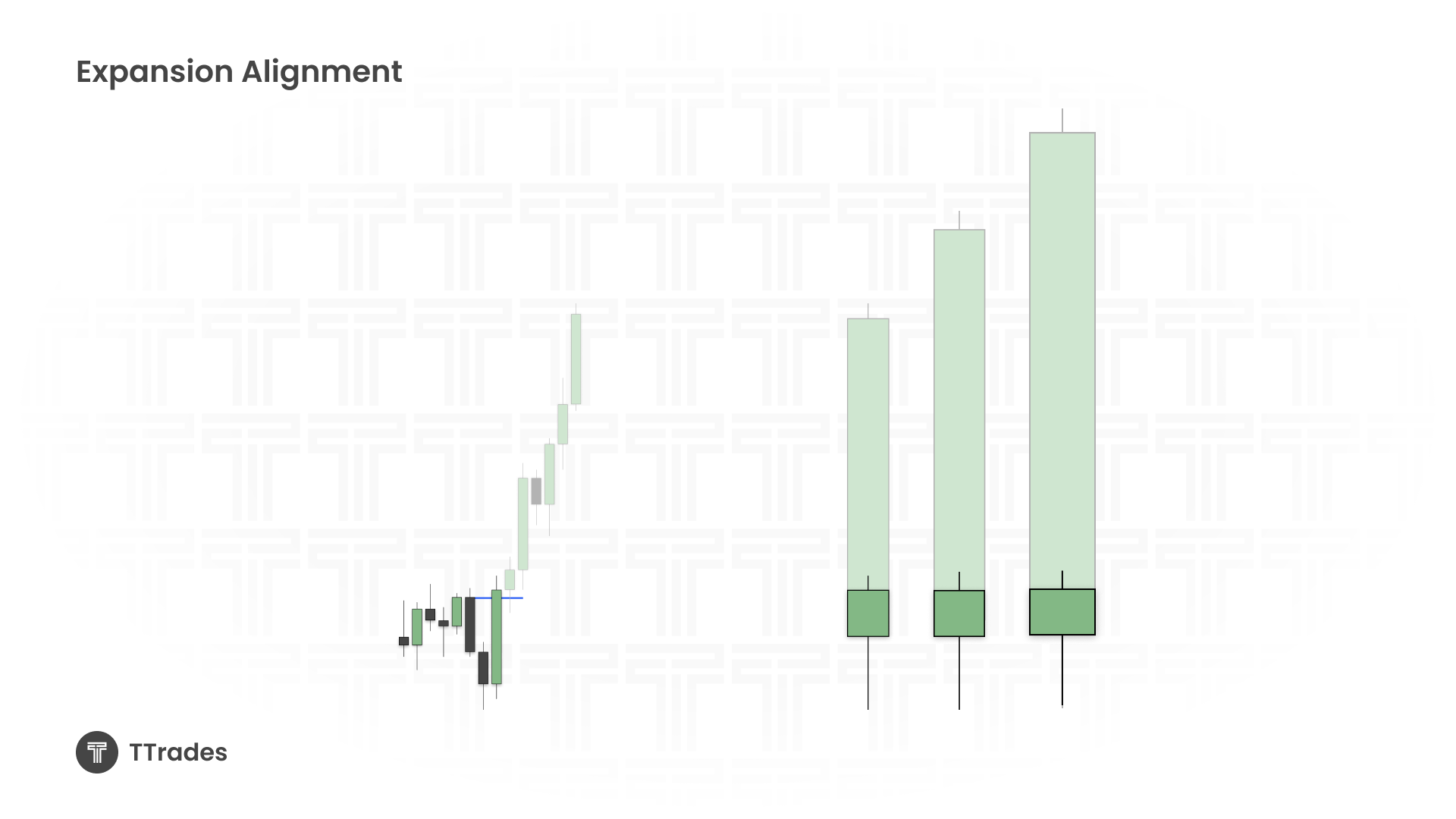
A true trend forms when multiple timeframes all support expansion in the same direction.
At a minimum, two aligned expansion candles are enough to trade. For example, a daily candle and a four-hour candle aligned together is sufficient to trade a fifteen-minute chart.
The ideal scenario is three aligned timeframes. A daily candle, a four-hour candle, and an hourly or thirty-minute candle all showing small wicks and expansion intent. This alignment with lower timeframe structure is when a trend can occur
Bias Always Comes From the Higher Timeframe
Bias starts from the top down.
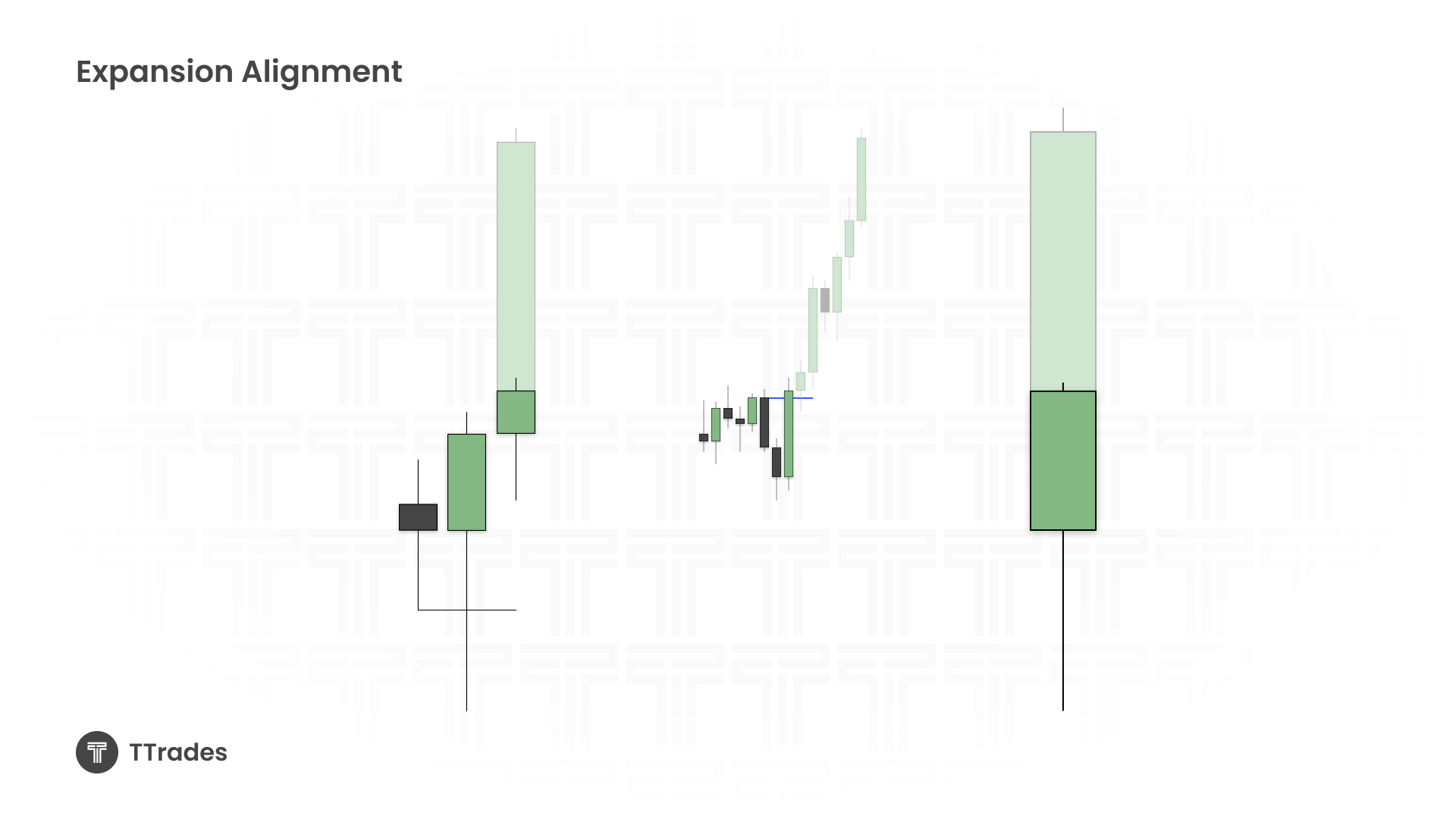
If the daily candle has a small wick, forms its low early, and begins pushing away from the open, your job is not to predict. Your job is to wait for lower timeframes to align with that direction.
If a lower timeframe candle has a large wick, you wait. You do not force a trade. Often the next candle will form with a small wick, which becomes the continuation opportunity.
Trading Candle Three for Continuation
Candle three is one of the cleanest ways to trade expansion.
Candle one creates the range. Candle two creates the manipulation. Candle three is the expansion.
When candle three forms with a small wick and a protected swing, momentum is confirmed. The easiest trends occur when candle three aligns on multiple timeframes at the same time. A daily candle three, a four-hour candle three, and an intraday candle three occurring together is simply a trend by definition.
Using Structure to Confirm Expansion
Expansion works best when structure supports it.
This often appears as protected swings, continuation order blocks, or fair value gaps aligning with the expansion direction. Once a higher timeframe candle forms its wick and protects that swing, price is free to continue.
Entries make the most sense after uncertainty resolves, not during it.
Expansion Also Applies to Reversals
Expansion alignment can also be used for reversals.
If a higher timeframe forms a small wick showing rejection, and an intermediate timeframe confirms with its own small wick and protected swing, all timeframes can align for expansion in the new direction. These setups are harder to anticipate, but powerful when they occur.
When the Daily Does Not Support Expansion
Not every day is a trend day.
If the daily candle has a large opposing wick, strong rejection is present. In those cases, large expansion is unlikely. Targets should be more conservative, often toward the daily open or nearby intraday highs or lows.
Lower timeframes can still expand, but expectations must be adjusted.
Why Multi-Timeframe Alignment Matters Most
You can have perfect lower timeframe structure, but if higher timeframes do not support expansion, the trade is fighting pressure above it.
When higher timeframes align, retracements are small and continuations follow through. When they do not, trades stall or reverse early.
If you take nothing else from this concept, always check whether higher timeframe candles support expansion before looking for entries.
Final Thoughts
Trends are not random. They form when candles align in body, wick, structure, and timeframe. By learning to identify expansion candles and align them across timeframes, you stop chasing moves and start trading momentum that is already in motion.