
Introduction
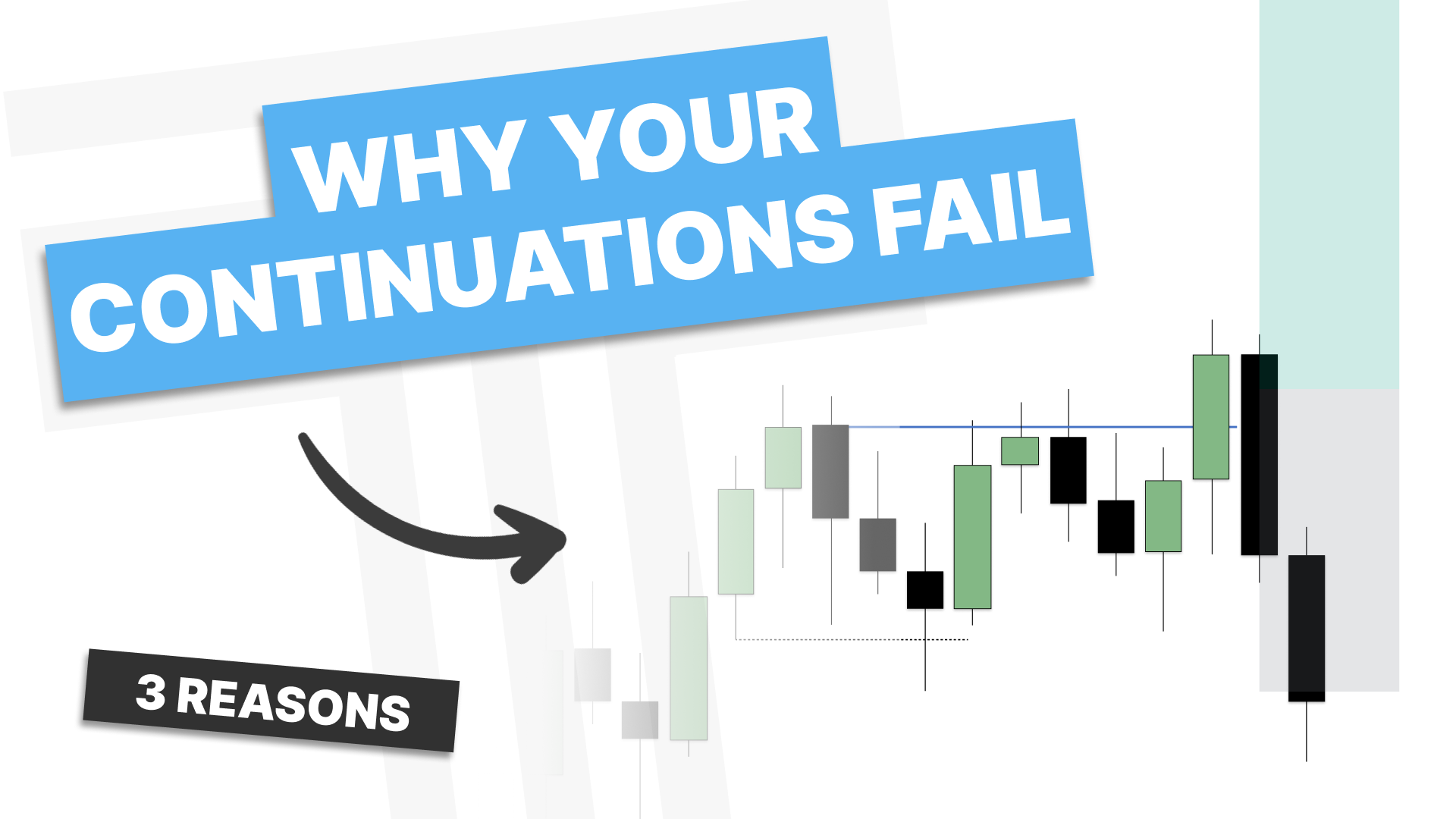
Continuations are one of the most powerful concepts in trading, but they are also one of the most misunderstood. Many traders follow their rules, see what looks like a clean setup, and still get stopped out. The issue is rarely bias and almost always structure. Understanding why continuations fail starts with understanding what a continuation is supposed to communicate about intent, timing, and location.
What an Ideal Continuation Looks Like
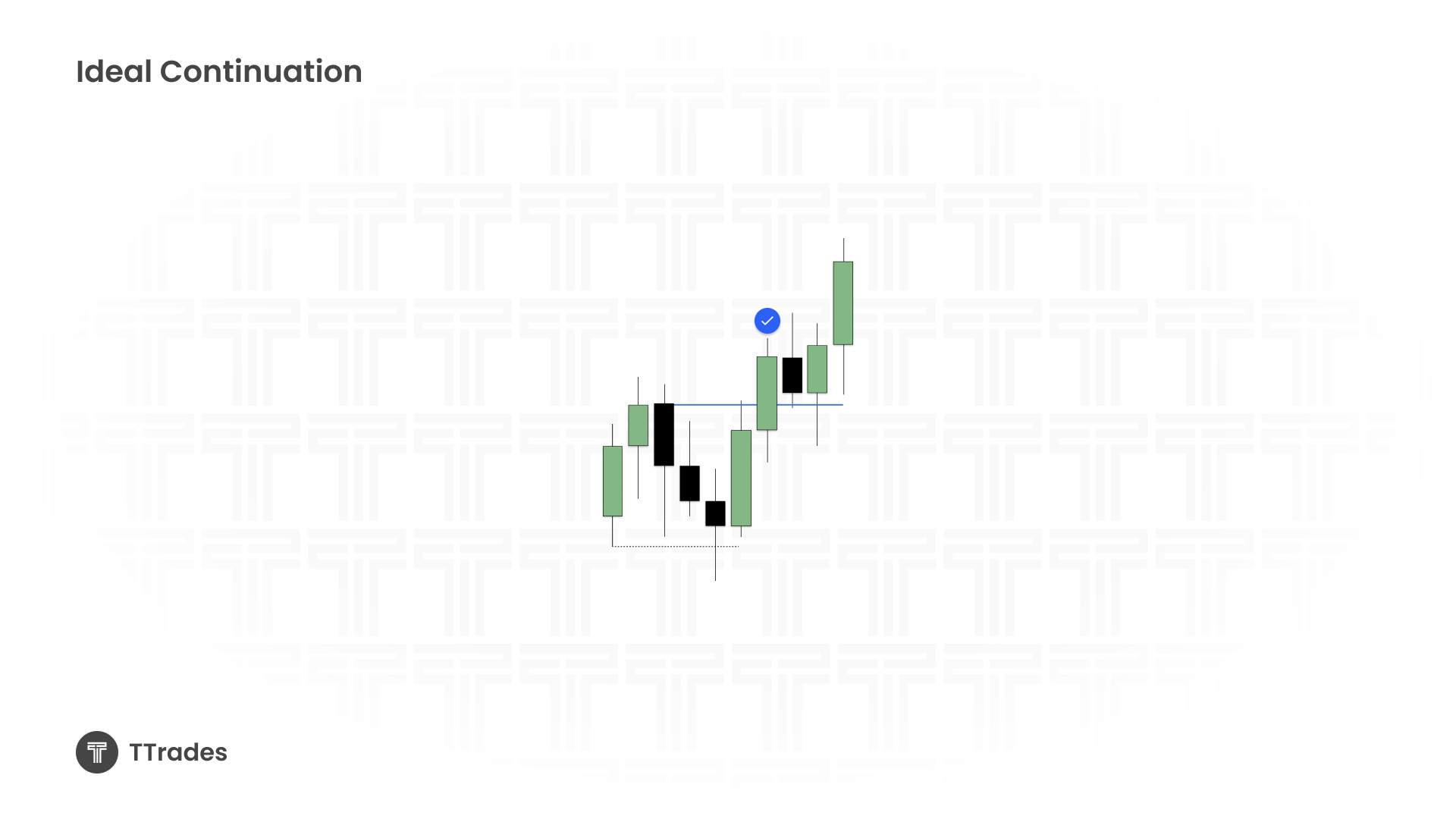
An ideal continuation is not subtle. It is fast, decisive, and clear in its intent. Price reaches into a point of interest such as a fair value gap or a swept low and responds with an aggressive V shaped reversal. That reversal quickly closes through opposing candles and shows that price has no interest in trading deeper. When price behaves this way, the swing low or high becomes protected and continuation higher or lower can be anticipated with confidence.
Reason One: Consolidation Disguised as Continuation
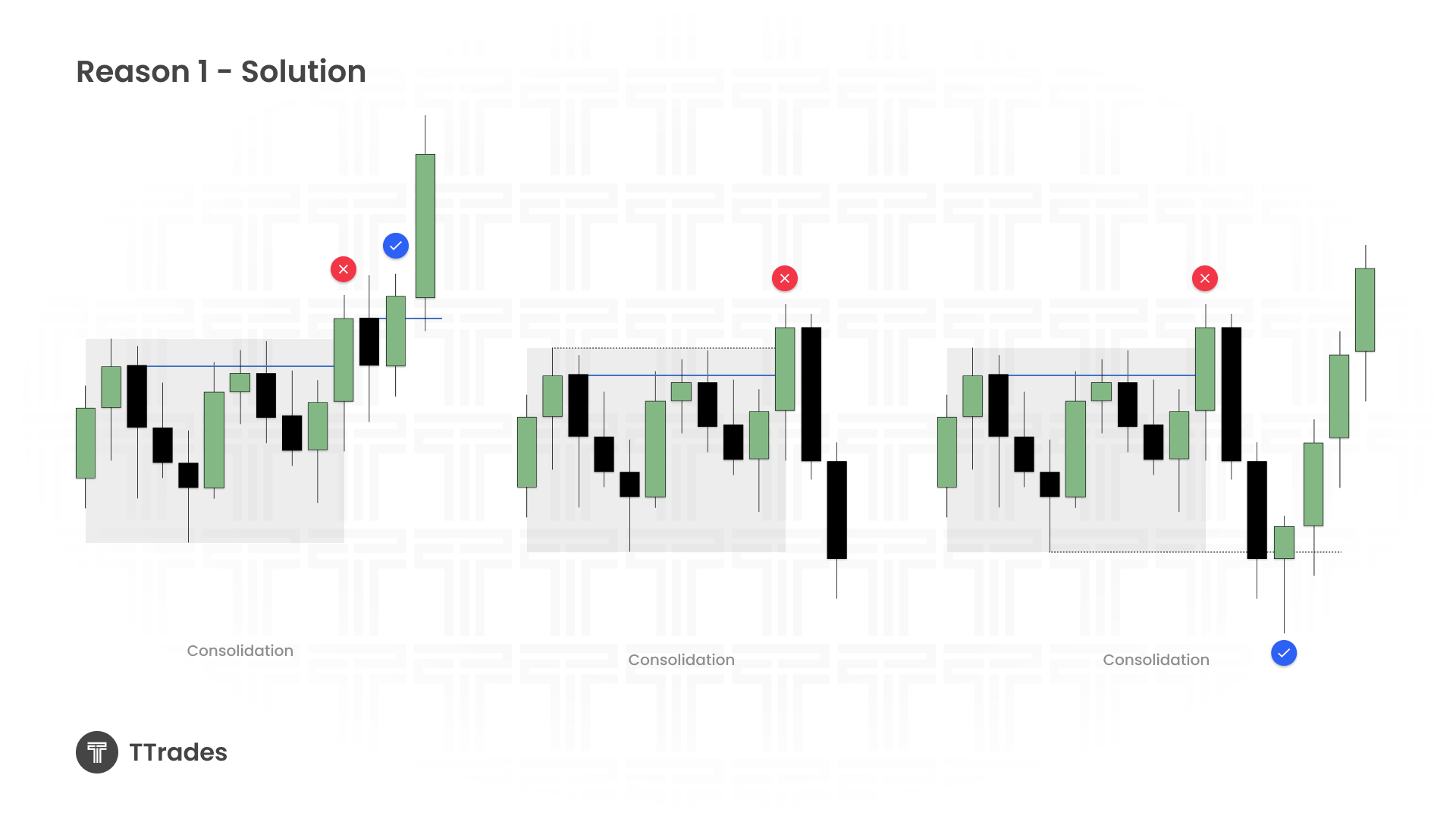
The most common reason continuations fail is because they are not continuations at all. When price fails to recover quickly and instead drifts sideways, the market is forming a consolidation.
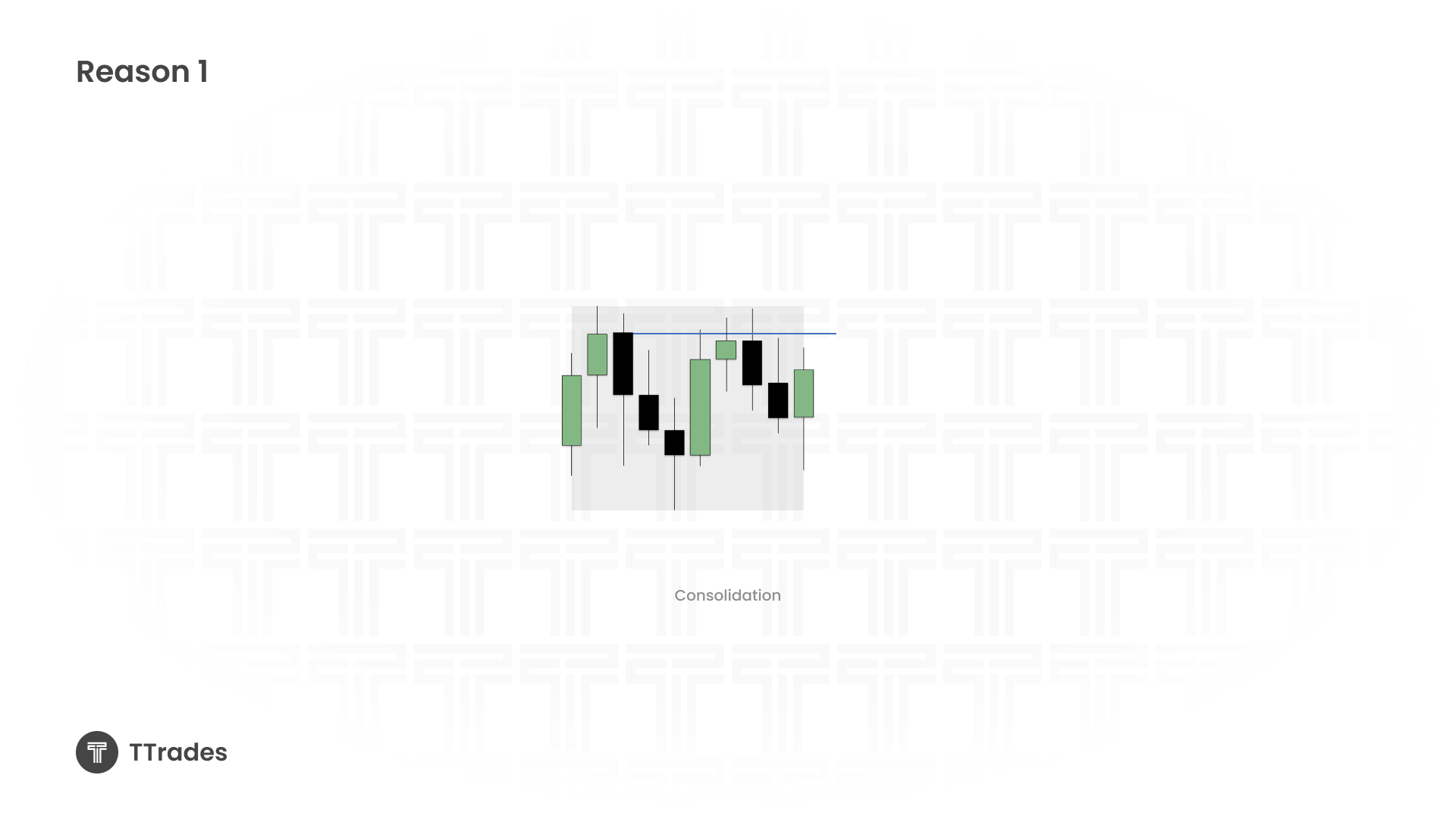
A slow grind followed by a close through opposing candles often looks convincing, but that close is frequently just a manipulation of the range. Price then trades to the opposite side of the consolidation and stops out traders who entered too early.
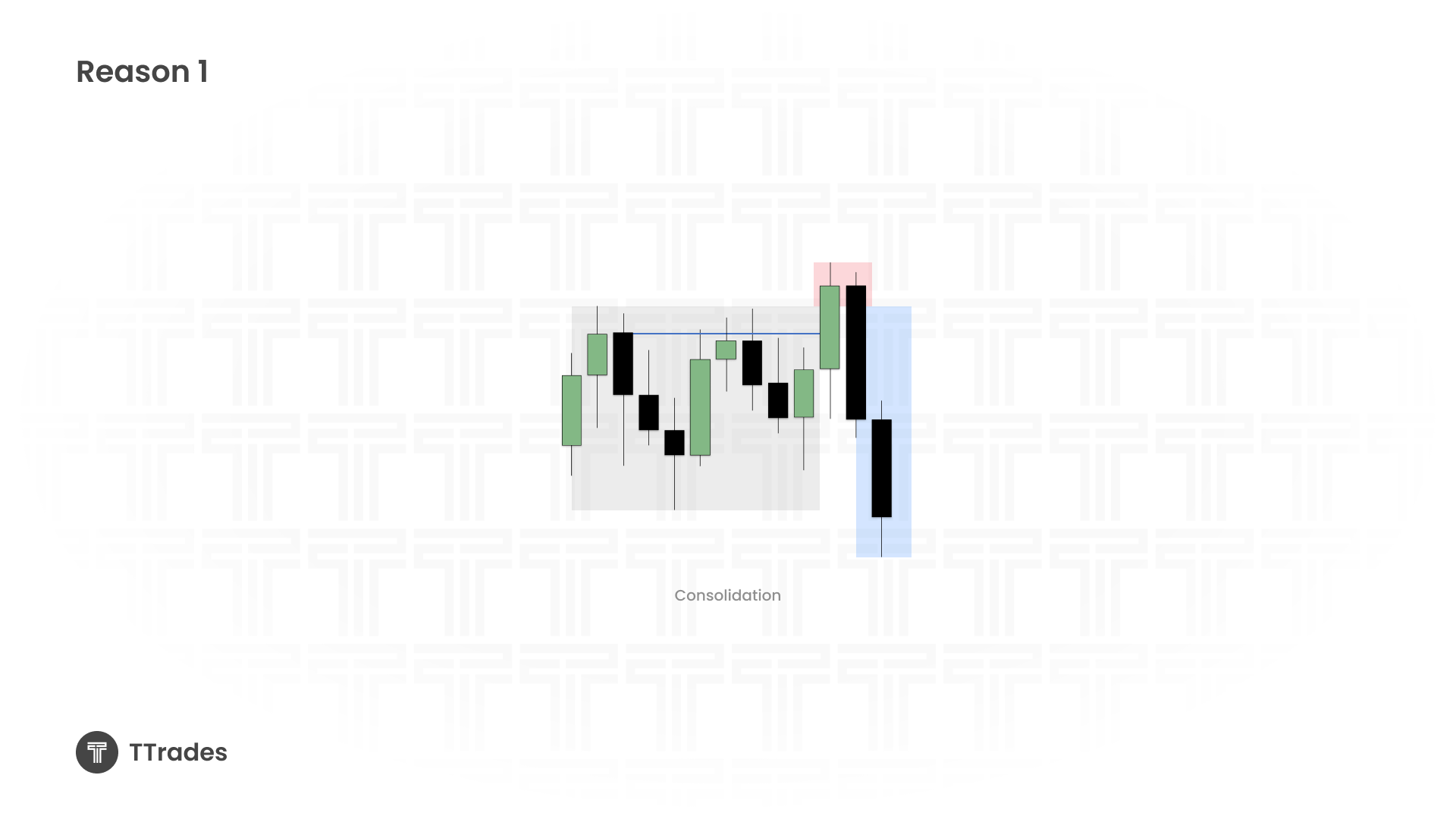
The solution is patience. When price does not give a clean V shaped reversal, you wait. The next candle will tell you whether price is truly breaking out or rotating across the range. If it fails and trades back through the range, the original continuation idea is invalid and the range extremes become the new points of interest.
How to Handle Consolidations Correctly
Once price is identified as consolidating, your approach must change. You are no longer trading continuations inside the range. You are waiting for either a manipulation of the range or a breakout followed by confirmation. Internal moves inside consolidation provide poor structure and unreliable protection. Waiting for price to either sweep a side of the range and reverse or break out and form a new continuation keeps you aligned with intent instead of noise.
Reason Two: Continuation Forms While Taking Short Term Targets
Another common failure occurs when a continuation forms at the same time price is taking out short term highs or lows. Liquidity sweeps often mark areas where price can pause, reverse, or transition into a new phase. Entering immediately after a sweep increases the chance of being stopped out even if the higher timeframe bias is correct.
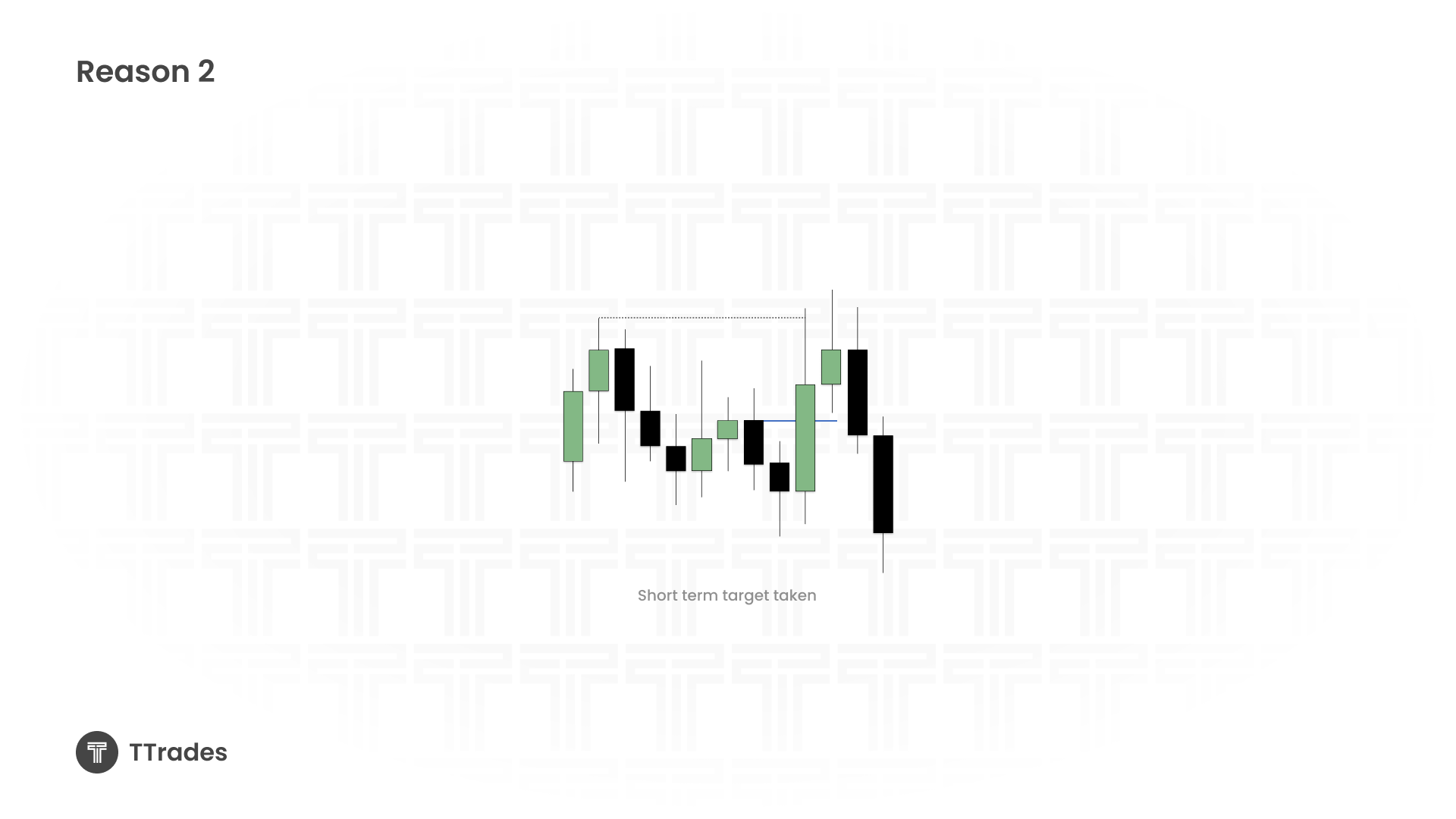
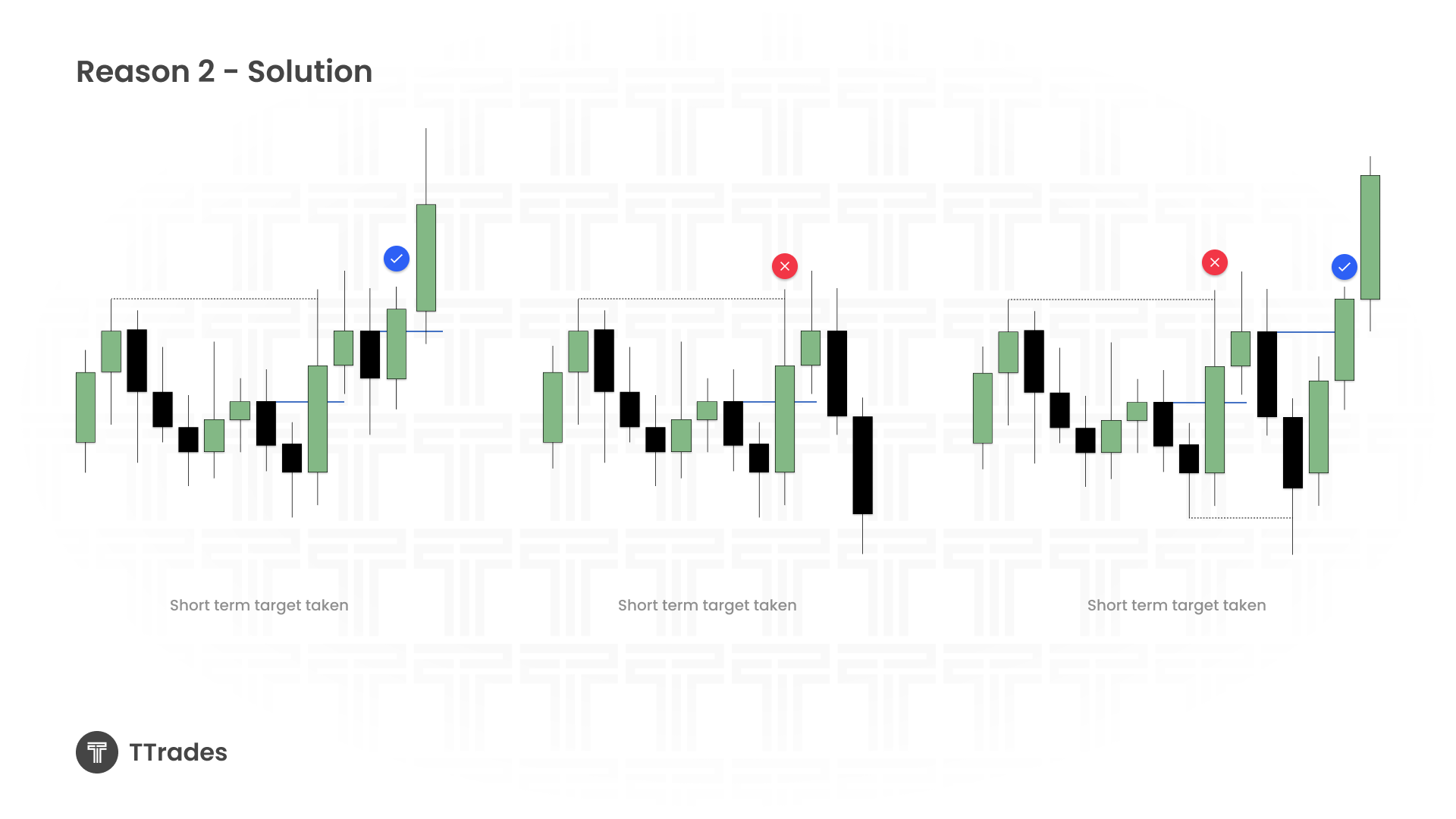
In these situations, additional confirmation is required. Waiting for another continuation after the sweep allows price to prove that it intends to continue rather than reverse. If price respects opposing candles or fair value gaps after the sweep, continuation becomes valid again. If it fails and rotates back through the range, the original entry was premature.
Why Liquidity Sweeps Matter
Sweeping highs or lows is often the completion of an objective. These areas are where reversals are most likely to form. Even if price eventually continues in the same direction, the initial reaction after a sweep is often corrective. Recognizing this prevents chasing entries at structurally weak locations.
Reason Three: Higher Timeframe Targets Already Met
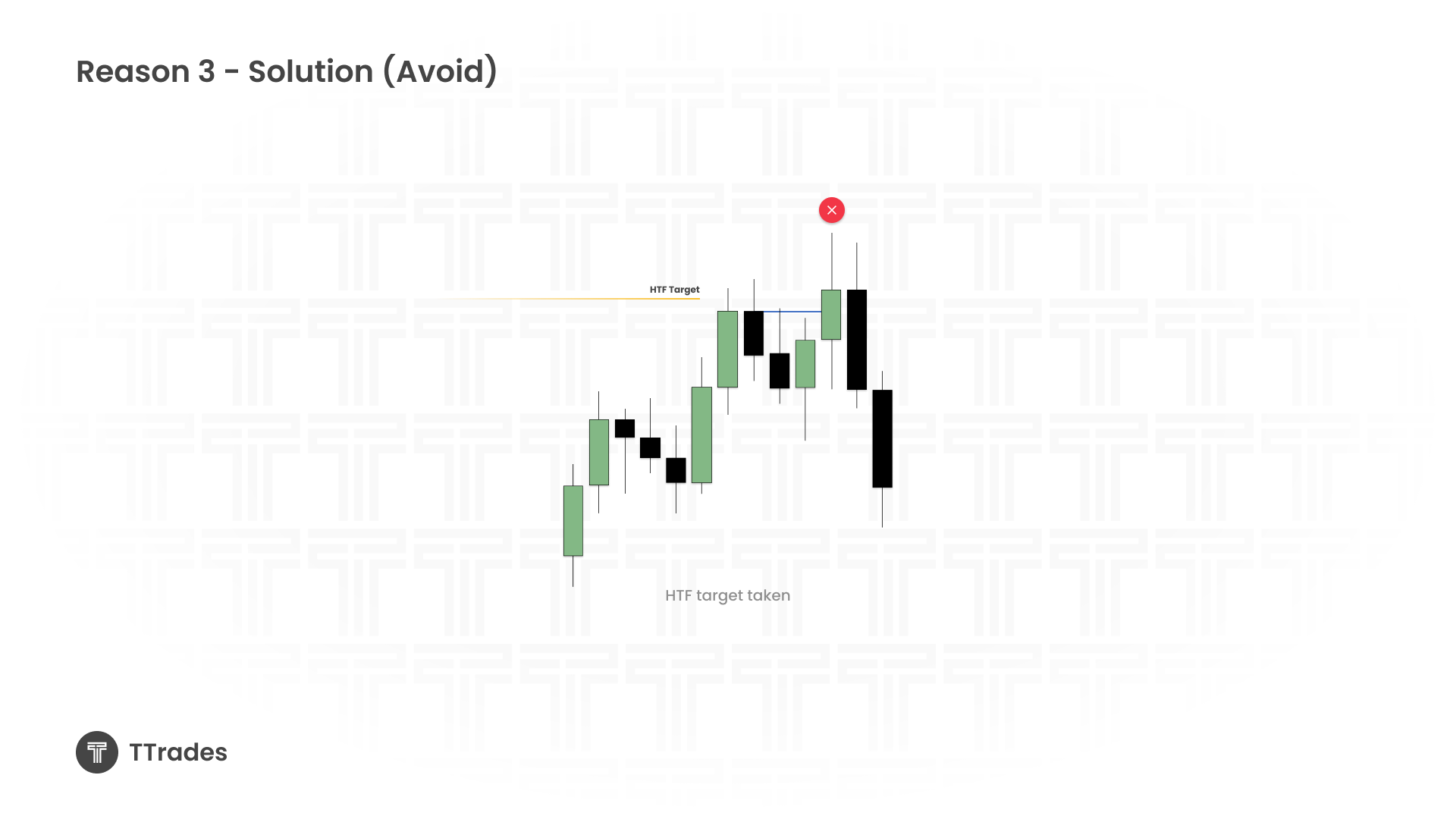
Continuations also fail when traders attempt to enter after a higher timeframe target has already been reached. Strong expansion into previous highs, lows, or major objectives is where price frequently consolidates or reverses. Even clean looking continuations in these areas offer poor risk to reward and are vulnerable to sudden shifts in direction.
Accepting that some moves will be missed is essential. Avoiding late entries protects capital and keeps you available for the next high quality opportunity.
Speed and Timing of Valid Continuations
Speed is a defining characteristic of strong continuations. The best setups form within one to three candles and show immediate displacement. When price takes many candles to recover or reclaim a level, intent weakens and structure fails. Slow continuations are often consolidations in disguise.
The Power of Waiting One More Candle
Waiting one additional candle is one of the simplest and most effective filters you can use. That single candle often reveals whether price will expand, whether structure is truly protected, and whether higher timeframe liquidity has been ran. Many losing trades disappear when this rule is applied consistently.
Final Thoughts
Most continuation failures come from misreading consolidation, ignoring liquidity sweeps, or entering after higher timeframe objectives have been met. Strong continuations are fast, clean, and well located. Weak continuations hesitate, overlap, and form at poor locations. The goal is not to trade every setup, but to trade the ones that clearly show intent and structure.